
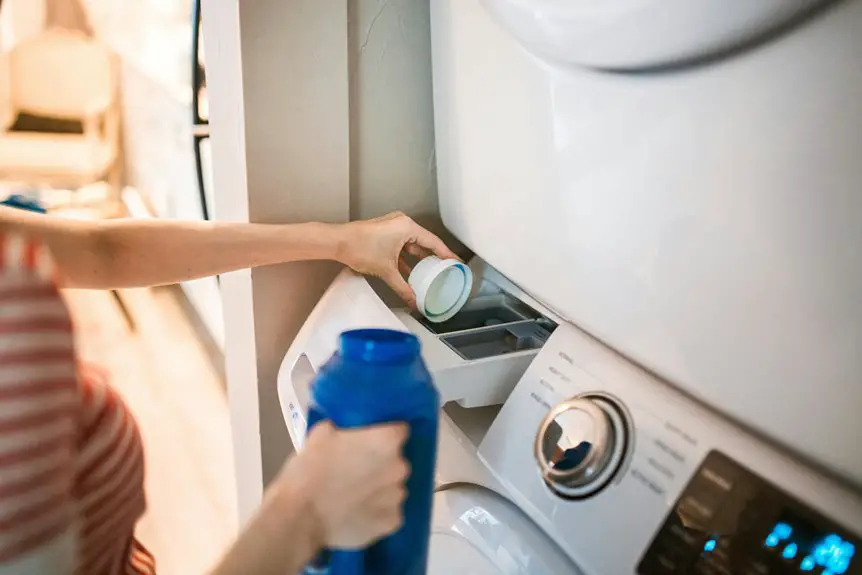
Yes, there are several anti-pilling laundry detergents on the market designed to help you maintain your clothes’ appearance and longevity. Brands like Tide, Persil, and Arm & Hammer offer specialized formulas that reduce friction and keep fabrics looking fresh. These detergents contain ingredients like enzymatic cleaners and fabric softeners that help prevent pilling. To find the best option for your wardrobe, discover key choices and effective usage tips that can further enhance your results.
Key Takeaways
- Yes, there are anti-pilling laundry detergents available on the market designed to minimize fabric pilling during washing and drying.
- Popular brands like Tide, Persil, and Arm & Hammer offer specialized anti-pilling formulas for fabric care.
- These detergents contain key ingredients such as enzymatic cleaners and fabric softener additives that help reduce friction and maintain garment appearance.
- User reviews and fabric compatibility assessments can aid in selecting the most effective anti-pilling detergent for specific clothing types.
- Proper usage, including washing in cold water and using gentle cycles, enhances the effectiveness of anti-pilling detergents.
Understanding Pilling and Its Causes
Pilling occurs when fibers in your clothing break and tangle together, forming small balls on the fabric’s surface. This annoying issue often arises from friction, whether it’s from washing, wearing, or even storing your clothes.
Fabrics like wool, polyester, and cotton are particularly susceptible to pilling due to their fiber structure. When you wash your clothes, the agitation in the machine can cause these fibers to loosen and tangle.
Additionally, wearing your clothes regularly can create friction against surfaces, leading to pilling over time. Environmental factors, like humidity and heat, can also contribute to this problem.
The Role of Laundry Detergent in Fabric Care
When it comes to fabric care, the composition of your materials plays an essential role in how well they respond to laundry detergents.
The formulation of the detergent you choose can greatly affect the longevity and appearance of your clothes.
Plus, the techniques you use while washing can either enhance or hinder the fabric’s condition, making your choices all the more important.
Fabric Composition Matters
While you might be focused on choosing the right detergent, understanding your fabric’s composition is equally essential for effective care.
Different materials react uniquely to detergents, which can impact how well they maintain their appearance. Here are key fabric types to contemplate:
- Cotton: Durable and absorbs detergent well but can pill if washed improperly.
- Wool: Sensitive to harsh chemicals; choose a gentle detergent specifically for wool.
- Polyester: Resists stains but can attract lint; a specialized detergent helps maintain its look.
- Silk: Requires a delicate touch; use a detergent formulated for silk to avoid damage.
- Nylon: Strong and resilient; verify the detergent is safe to prevent wear.
Knowing these details helps you make informed decisions for laundry success!
Detergent Formulation Impact
Understanding your fabric’s composition sets the stage for selecting the right detergent, but the formulation of that detergent plays a significant role in maintaining fabric integrity. Detergents with specific enzymes and surfactants can reduce friction, thereby minimizing pilling. Choosing a detergent designed for delicate fabrics can enhance longevity and preserve texture.
Here’s a quick comparison of detergent formulations:
| Detergent Type | Key Ingredients | Best For |
|---|---|---|
| Standard Detergent | Surfactants, Builders | Everyday laundry |
| Delicate Detergent | Enzymes, Mild Surfactants | Sensitive fabrics |
| Anti-Pilling Detergent | Anti-static agents, Softening agents | Reducing pilling |
Washing Techniques Influence
Choosing the right washing techniques can greatly influence how well your laundry detergent performs in protecting your fabrics. By adopting effective methods, you can enhance both cleanliness and fabric longevity.
Here are some key tips to take into account:
- Sort your laundry: Separate fabrics by color and weight to prevent damage and fading.
- Use cold water: It’s gentler on fabrics and helps maintain their integrity.
- Don’t overload the washer: Give your clothes space to move, allowing the detergent to clean effectively.
- Select appropriate cycles: Use gentle cycles for delicate items to minimize wear.
- Follow detergent instructions: Use the recommended amount for ideal cleaning without residue.
What Are Anti-Pilling Laundry Detergents?
Anti-pilling laundry detergents are specially formulated products designed to help maintain the appearance and texture of your fabrics.
These detergents work by reducing the friction that causes pilling during washing and drying. When you use them, you’ll notice fewer fuzz balls and snags, keeping your clothes looking new for longer.
These detergents minimize friction during washing and drying, resulting in fewer fuzz balls and snags for longer-lasting, fresh-looking clothes.
They’re ideal for delicate fabrics like knits and wool, which are prone to pilling. By choosing an anti-pilling detergent, you can enhance the longevity of your favorite garments, ensuring they maintain their softness and visual appeal.
Plus, using these detergents can save you money in the long run by prolonging the life of your clothing. Overall, they’re a smart choice for anyone looking to care for their wardrobe.
Key Ingredients to Look for in Anti-Pilling Detergents
When choosing an anti-pilling detergent, look for key ingredients that can make a difference.
Enzymatic cleaners can break down fabric debris, while fabric softener additives help maintain softness and reduce friction.
Also, pay attention to the pH balance, as it plays a vital role in protecting your clothes from damage.
Enzymatic Cleaners Benefits
While you mightn’t think about it often, the right enzymes in your laundry detergent can make a significant difference in keeping your clothes looking new.
Enzymatic cleaners target specific stains and fibers, effectively reducing pilling and extending the life of your garments. Here are some benefits of using these cleaners:
- Enhanced stain removal: Breaks down proteins, fats, and carbohydrates.
- Gentler on fabrics: Protects fibers from damage and wear.
- Eco-friendly options: Often derived from natural sources, reducing environmental impact.
- Versatile use: Works on a wide range of fabrics, from delicate to durable.
- Long-lasting freshness: Helps maintain vibrant colors and freshness in your laundry.
Choosing a detergent with the right enzymes can keep your wardrobe looking fresh and new for longer!
Fabric Softener Additives
Choosing the right fabric softener additives is essential for maximizing the effectiveness of anti-pilling detergents. Look for softeners that contain silicone or quaternary ammonium compounds. These ingredients help reduce friction between fibers, preventing pills from forming on your clothes.
Additionally, consider fabric softeners with anti-static properties, as they can help keep your garments smooth and free from tangling in the wash. You might also want to opt for softeners that provide moisture and protection, which can further enhance fabric longevity.
Avoid those with heavy fragrances or dyes, as they may cause irritation or damage. By selecting the right additives, you’ll help maintain your fabrics’ appearance and feel while prolonging their lifespan.
Ph Balance Importance
Understanding the importance of pH balance in anti-pilling detergents can substantially impact the longevity of your fabrics. A balanced pH guarantees that the detergent cleans effectively without harming the fibers.
Here are key ingredients to look for:
- Natural enzymes: Break down stains while being gentle on fabrics.
- Mild surfactants: Clean without causing damage or fading.
- pH stabilizers: Maintain the right acidity level to protect fibers.
- Plant-based ingredients: Offer cleaning power with less risk of irritation.
- Color-safe agents: Prevent fading and maintain vibrant colors.
Popular Brands Offering Anti-Pilling Formulas
When you want to keep your favorite clothes looking their best, selecting a laundry detergent with anti-pilling properties can make all the difference. Several popular brands have recognized the need for such formulas.
Tide offers a specialized version that helps prevent fabric pills while maintaining cleaning power. Persil also features an anti-pilling formula designed to protect your garments from wear and tear.
Arm & Hammer has a variant infused with baking soda that not only cleans but also helps reduce pilling. Finally, Woolite focuses on gentle care, particularly for delicate fabrics, ensuring they stay pill-free.
How to Use Anti-Pilling Detergents Effectively
To get the most out of anti-pilling detergents, it’s essential to follow the manufacturer’s instructions carefully. Proper usage helps maintain your clothes and reduces pilling effectively.
Here are some tips to guarantee you’re using them correctly:
- Sort your laundry by color and fabric type to avoid damage.
- Use the recommended amount of detergent; too much can leave residue.
- Wash in cold water to protect fibers and prevent pilling.
- Choose a gentle cycle to minimize agitation, which can create pilling.
- Consider air-drying your clothes to reduce friction from the dryer.
Additional Tips for Preventing Pilling
While using anti-pilling detergents is a great start, there are additional strategies you can implement to further prevent pilling on your clothes. Here are some easy tips:
| Tip | Description |
|---|---|
| Wash Inside Out | Turn clothes inside out to reduce friction. |
| Use Gentle Cycle | Select a gentle wash cycle to minimize agitation. |
| Avoid Overloading | Don’t overload your washer; give clothes space to move. |
| Air Dry When Possible | Hang or lay flat to dry instead of using a dryer. |
These simple adjustments can make a big difference in maintaining the look and feel of your favorite garments. By incorporating these practices, you’ll keep pilling at bay and extend the life of your clothing.
Evaluating the Effectiveness of Anti-Pilling Detergents
How can you truly assess the effectiveness of anti-pilling detergents? To get a clear picture, you’ll want to take into account several factors before making a decision.
Here are some key points to evaluate:
- Fabric Compatibility: Check if the detergent is suitable for the materials you’re washing.
- Pilling Reduction Claims: Look for specific evidence or studies backing their claims.
- User Reviews: Read feedback from others who’ve tried the detergent on similar fabrics.
- Cost-Effectiveness: Compare the price with the results to determine if it’s worth the investment.
- Washing Instructions: Follow the recommended guidelines to maximize the detergent’s effectiveness.
Frequently Asked Questions
Do Anti-Pilling Detergents Work on All Fabric Types?
Anti-pilling detergents don’t work equally on all fabric types. While they’re effective on some materials, delicate fabrics may still pill. Always check labels and test on a small area to avoid damage before washing.
Can I Use Anti-Pilling Detergents With Fabric Softeners?
You can use anti-pilling detergents with fabric softeners, but it’s best to check the product labels. Combining them might enhance your laundry’s softness while reducing pilling, depending on the specific fabrics you’re washing.
How Often Should I Use Anti-Pilling Laundry Detergents?
Using anti-pilling laundry detergents is like giving your clothes a protective shield. You should use them with every wash to minimize pilling, especially for delicate fabrics. Consistency keeps your wardrobe looking fresh and new!
Are There Any Side Effects to Using Anti-Pilling Detergents?
Using anti-pilling detergents generally won’t harm your clothes, but if you’re sensitive to certain chemicals, you might experience skin irritation. Always check labels and consider testing a small area before full use.
Can Homemade Detergents Be Effective Against Pilling?
Homemade detergents can be effective against pilling, but their success depends on the ingredients you choose. You’ll want to include gentle cleaners and avoid harsh additives that could worsen fabric wear over time.