
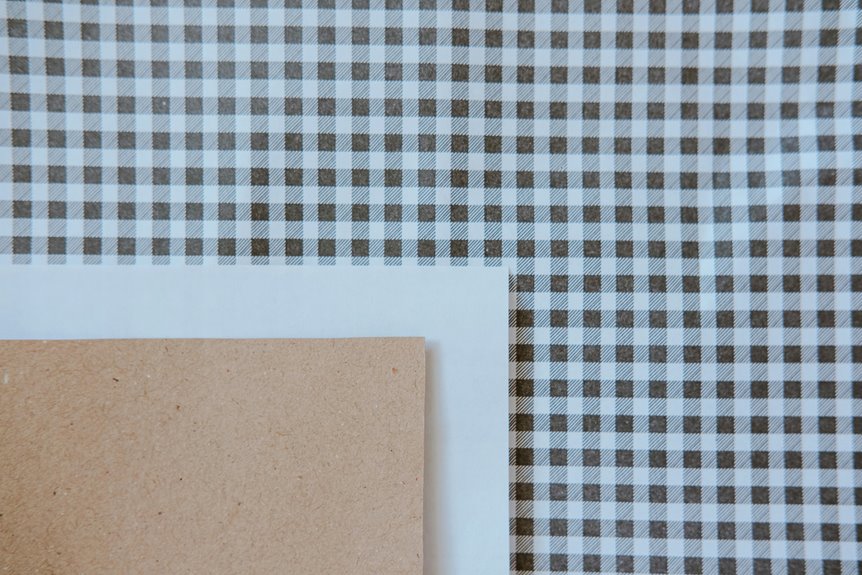
You shouldn’t call all checked fabrics gingham because it’s a specific type of lightweight, woven fabric with evenly sized checks in just two colors. Other checked patterns like tartan, plaid, or madras differ in color complexity and check size. Gingham has a simple, crisp look, making it distinct from other fabrics. If you want to understand how gingham stands apart and choose the right checked fabric for your project, there’s more to explore.
Key Takeaways
- Not all checked fabrics are called gingham; gingham has a specific pattern of evenly sized two-color checks.
- Gingham features a lightweight, plain-woven fabric with a crisp, smooth texture, distinct from heavier or complex checked fabrics.
- Patterns like tartan, plaid, and madras differ from gingham by having multiple colors, irregular block sizes, or varying stripe widths.
- Gingham is traditionally made with dyed yarns creating balanced checks, unlike other checks that may use different weaving or dyeing methods.
- Understanding gingham’s unique characteristics helps avoid confusion with other checked fabrics and ensures correct fabric identification.
Defining Gingham: Characteristics and Origins
Gingham is a lightweight, woven fabric known for its distinctive checked pattern, typically featuring white and one other color. When you look closely, you’ll see evenly sized checks formed by dyed yarns woven in a balanced plain weave. This creates a crisp, smooth texture that’s breathable and durable.
Gingham’s origins trace back to the 17th century, believed to have been imported into Europe from Southeast Asia. Initially, it was made of cotton or cotton blends, which you’ll find remain popular today.
The simplicity and timeless appeal make it versatile for clothing, home décor, and crafts. When you choose gingham, you’re picking a fabric with a rich history and a clean, classic look that’s both functional and stylish.
Comparing Gingham With Other Checked Patterns
Checked patterns come in many varieties, each with unique features that set them apart from one another. When you compare gingham to other checked fabrics, you’ll notice distinct differences.
First, gingham features evenly sized squares in two contrasting colors, typically white and another color, creating a simple and clean look.
Gingham showcases evenly sized squares in two contrasting colors, usually white and another, for a crisp, classic style.
Second, tartan or plaid patterns are more complex, with multiple colors and varying stripe widths that form intricate designs.
Third, madras checks use bright, vibrant colors with irregular block sizes, giving a casual, summery vibe.
Understanding these differences helps you pick the right fabric for your needs without confusing gingham for any checked pattern.
The History and Cultural Significance of Gingham
While you’ve learned how gingham stands out among other checked patterns, understanding its origins can deepen your appreciation for this fabric.
Gingham dates back to the 17th century, originally imported to Europe from Southeast Asia. Its simple, balanced check pattern made it popular for practical clothing and household items.
Over time, gingham became a symbol of Americana, linked to classic styles like picnic blankets, school uniforms, and vintage dresses. You’ll notice how its clean, timeless look conveys a sense of nostalgia and wholesomeness.
Whether used in fashion or décor, gingham carries cultural significance tied to simplicity and tradition. Knowing this history helps you see gingham not just as fabric, but as a meaningful design with roots in everyday life and heritage.
Common Misconceptions About Checked Fabrics
Why do so many people confuse different checked fabrics with one another? It’s easy to mix them up since many share similar patterns.
But you should know that not all checked fabrics are gingham. Here are three common misconceptions:
- All checked fabrics have the same origin. Actually, gingham, tartan, and plaid come from distinct histories and cultures.
- Checked patterns always mean gingham. Gingham features evenly sized checks in two colors, while others like tartan have varied, intersecting lines.
- Fabric texture and weave don’t matter. Gingham is usually lightweight and plain-woven, unlike heavier or twill-weaved checked fabrics.
Understanding these differences helps you identify and appreciate each fabric’s unique qualities, so you won’t confuse them again.
Choosing the Right Checked Fabric for Your Project
How do you pick the perfect checked fabric for your project? Start by considering the fabric’s purpose. If you need something lightweight and breathable, cotton gingham works well for shirts or dresses.
For upholstery or heavier use, look for wool or a cotton blend with a tighter weave. Pay attention to the check size and color contrast; smaller checks create subtle patterns, while larger checks make bold statements.
Also, think about the fabric’s durability and care requirements, especially if your project involves frequent washing. Remember, not all checked fabrics are gingham—tartan or buffalo checks have distinct patterns and textures that might better suit your needs.
Frequently Asked Questions
Can Gingham Fabric Be Made From Synthetic Fibers?
You might think gingham’s only cotton, but it can be made from synthetic fibers too. Manufacturers often use polyester blends, so you’ll find gingham that’s durable, wrinkle-resistant, and easy to care for without losing its classic look.
Is Gingham Fabric Suitable for Upholstery?
You can use gingham fabric for upholstery, but it’s best for light-use furniture since it’s usually lightweight. For durability, you might want to choose heavier fabrics or blends designed specifically for upholstery projects.
How Do You Care for and Wash Gingham Fabric?
You should wash gingham fabric in cold water on a gentle cycle to prevent shrinking. Avoid bleach, and air dry or tumble dry low. Iron on a medium setting if needed to keep its crisp look.
Are Gingham Patterns Available in Colors Other Than Red and White?
You’ll find gingham patterns in various colors beyond red and white, like blue, green, and yellow. Designers love experimenting, so you can choose gingham to match your style with many vibrant or subtle shades.
Can Gingham Fabric Be Used for Formal Clothing?
Picture a garden party where gingham’s playful charm shines. You can definitely use gingham for formal clothing, but choose subtle colors and fine fabrics to keep it classy without losing that charming, checkered spirit.