
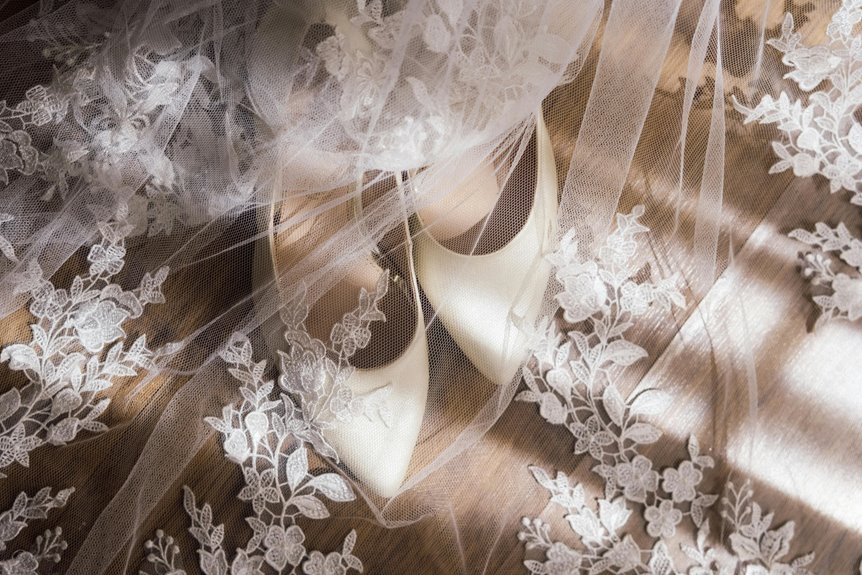
Choosing between Alençon and Guipure lace for your bridal gown depends on your style and care preferences. Alençon lace offers delicate floral needlepoint on a fine net background, giving a refined, lightweight feel, perfect for classic elegance. Guipure lace showcases bold, connected motifs without a net, creating a dramatic textured look suited for modern or vintage vibes. Each requires distinct maintenance and varies in cost. Keep exploring to discover which lace fits your dream dress perfectly.
Key Takeaways
- Alençon lace features fine needlepoint with delicate floral motifs and a raised cordonnet on a fine net background, creating a subtle 3D effect.
- Guipure lace has bold, interconnected motifs without a net background, offering a heavier, more textured, and dramatic bridal fabric option.
- Alençon lace demands meticulous hand stitching and longer production time, contributing to its higher cost and exclusivity.
- Guipure lace is easier to produce, often machine-assisted, making it more affordable and widely available for bridal designs.
- Alençon lace requires gentle hand washing and flat storage, while Guipure lace tolerates gentler soaking and more flexible storage methods.
History and Origin of Alençon and Guipure Lace
Lace has long been a symbol of elegance in bridal fashion, and understanding the history of Alençon and Guipure lace helps you appreciate their unique qualities.
Alençon lace originated in the 17th century in the town of Alençon, France, where artisans developed a meticulous needle lace technique. It became known as the “Queen of lace” due to its fine craftsmanship and delicate floral patterns.
On the other hand, Guipure lace emerged later as a heavier lace style, characterized by its bold, interconnected motifs without a net background. Originating in Italy, Guipure gained popularity across Europe for its dramatic appearance.
As you explore bridal fabrics, knowing these origins deepens your appreciation for the craftsmanship and cultural heritage embedded in each lace type.
Distinctive Characteristics of Alençon Lace
The intricate detail of Alençon lace instantly sets it apart in bridal fashion. When you examine this lace closely, you’ll notice its fine needlepoint technique, creating delicate floral motifs outlined with a raised cordonnet.
This corded edge gives the lace a subtle three-dimensional effect, adding depth and elegance to your wedding gown. Alençon lace features a fine net background, which feels light and airy against your skin, perfect for intricate designs without heaviness.
You’ll also appreciate its durability; despite its delicate look, it holds up well through wear. The lace’s combination of precise craftsmanship and delicate patterns makes it a timeless choice, ensuring your bridal look remains sophisticated and graceful throughout your special day.
Key Features of Guipure Lace
When you choose Guipure lace, you’ll notice its bold, intricate patterns that stand out without a net background.
The fabric feels heavier and more textured compared to other laces, giving your dress a unique structure.
You’ll also appreciate how durable it’s and how easy it’s to care for over time.
Design and Patterns
Intricate motifs and bold outlines define Guipure lace’s design and patterns, offering a striking contrast to more delicate laces.
When you choose Guipure, you’ll notice its distinctive connected motifs, often floral or geometric, linked by bars or plaits instead of netting. This gives the lace a raised, almost three-dimensional effect that really stands out.
You’ll appreciate how the open spaces between the motifs create a dramatic, airy look while maintaining structural integrity. The patterns tend to be larger and more pronounced, so if you want your bridal gown to make a statement, Guipure is a fantastic choice.
Its design versatility lets you find styles ranging from bold and modern to vintage-inspired, helping you match your dress to your personal aesthetic effortlessly.
Fabric Texture and Weight
Guipure lace feels substantial under your fingers, offering a texture that’s both bold and tactile. Unlike delicate, sheer laces, it boasts a heavier weight due to its dense embroidery and lack of netting.
This thickness gives your gown a structured feel while maintaining elegance. When you choose guipure, you’re selecting fabric that stands out not just visually but physically.
Here’s what you can expect from guipure lace’s texture and weight:
- Noticeably thicker than fine laces, giving a pronounced hand feel
- Raised embroidery creates a three-dimensional effect you can touch
- Provides a sturdy drape, enhancing bridal silhouettes
- Comfortable yet firm, avoiding flimsy or overly soft sensations
This texture makes guipure lace a striking choice for statement bridal gowns.
Durability and Maintenance
Although it requires a bit more care than simpler fabrics, you’ll find guipure lace holds up remarkably well over time. Its dense, raised patterns resist wear and tear better than more delicate laces.
To keep it looking pristine, avoid harsh detergents and always hand wash or use a gentle cycle with cold water. Lay it flat to dry to prevent distortion.
Because guipure lace lacks a backing net, it’s less prone to snags, but you should still handle it carefully to avoid stretching or pulling the motifs.
Proper storage is key—store your garment in a breathable garment bag away from direct sunlight to prevent yellowing.
With mindful maintenance, guipure lace can remain a beautiful, durable choice for your bridal gown.
Craftsmanship and Production Techniques
When you examine the craftsmanship behind Alençon and Guipure lace, you’ll notice that each demands a distinct set of skills and techniques.
Alençon lace is known for its delicate needlepoint lace made on a fine net background, requiring meticulous handwork. Guipure lace, on the other hand, is a heavier lace created by connecting motifs with bars or plaits rather than a net.
Here’s what sets their production apart:
- Alençon lace involves hand-embroidering floral patterns onto a net base using a fine cordonnet thread.
- Guipure lace is crafted by linking embroidered motifs with bridges, giving it a bold, textured look.
- Alençon requires precise stitching for its raised designs, demanding expert needlework.
- Guipure’s open structure allows for machine-assisted production but still needs skilled finishing.
Styling and Suitability for Different Wedding Dresses
Understanding the unique craftsmanship behind Alençon and Guipure lace helps you appreciate how each complements different wedding dress styles.
If you’re aiming for a classic, romantic look, Alençon lace fits beautifully with traditional gowns, especially those featuring delicate silhouettes or vintage-inspired designs. Its fine, floral motifs add subtle elegance without overwhelming the dress.
On the other hand, Guipure lace offers bold, graphic patterns that suit modern, statement-making gowns. It’s perfect if you want your lace to stand out, especially on structured or minimalist dresses. You can use Guipure for dramatic overlays or sleeves to create visual interest.
Ultimately, choosing between these laces depends on your dress’s style and the vibe you want—Alençon for timeless softness, Guipure for striking texture and edge.
Care and Maintenance Tips for Each Lace Type
You’ll want to handle Alençon and Guipure lace with care to keep them looking their best.
Each lace type has specific cleaning methods and storage tips that can extend its life.
Let’s explore how to properly maintain both to preserve their delicate beauty.
Cleaning Methods
Although both Alençon and Guipure lace demand gentle care, their distinct textures require different cleaning approaches to preserve their delicate beauty.
When cleaning these laces, you need to be mindful of their unique structures to avoid damage.
- For Alençon lace, always hand wash in cold water with a mild detergent to protect its fine netting and intricate corded patterns.
- Guipure lace can handle a bit more agitation; gently soak it in lukewarm water with a gentle soap but avoid scrubbing.
- Never use bleach or harsh chemicals on either lace type, as they weaken fibers and cause discoloration.
- After washing, carefully press the lace between towels to remove excess water—never wring or twist your delicate fabric.
Storage Recommendations
Because both Alençon and Guipure lace are delicate, storing them properly is essential to maintain their shape and prevent damage.
You should keep these laces in a cool, dry place away from direct sunlight to avoid yellowing and weakening fibers.
For Alençon lace, store it flat or rolled in acid-free tissue paper to prevent creases and preserve its fine netting.
Guipure lace, being thicker, can be gently folded with tissue paper between layers to avoid snagging.
Avoid hanging either lace fabric for long periods, as this can distort their shapes.
Use breathable fabric bags instead of plastic to allow airflow and reduce moisture buildup.
Following these steps will keep your lace bridal fabrics looking pristine for years to come.
Pricing and Availability in Bridal Markets
Several factors influence the pricing and availability of Alençon and Guipure lace in bridal markets.
When choosing between the two, you’ll notice that Alençon lace often carries a higher price tag due to its intricate needlepoint technique and time-consuming production. Guipure lace, while still elegant, tends to be more affordable and easier to source.
Keep these key points in mind:
- Craftsmanship: Alençon’s hand-crafted details increase cost.
- Material Sourcing: Both use fine threads, but Alençon requires specific silk or cotton blends.
- Production Time: Alençon takes longer to produce, affecting availability.
- Market Demand: Guipure is popular for modern designs, boosting its widespread availability.
Understanding these factors helps you make informed decisions tailored to budget and style.
Frequently Asked Questions
Can Alençon and Guipure Lace Be Combined in One Dress Design?
Imagine weaving moonlight and shadows into one gown—you can absolutely combine Alençon’s delicate floral patterns with Guipure’s bold, openwork designs. You’ll craft a stunning dress that balances softness and drama beautifully.
Which Lace Is More Breathable for Summer Weddings?
You’ll find Guipure lace more breathable for summer weddings because its open, airy patterns allow better airflow. Alençon lace is denser and less ventilated, so it might feel warmer in hot weather.
Do Either Lace Types Have Hypoallergenic Properties?
Neither Alençon nor Guipure lace is inherently hypoallergenic, but you can reduce irritation by choosing natural fibers and ensuring the lace is clean. If you have sensitive skin, test the fabric before your big day.
How Do These Laces Perform Under Different Lighting Conditions?
You’ll notice Alençon lace glows softly under warm light, highlighting its fine details, while Guipure lace casts bold shadows, emphasizing its heavier texture. Both react uniquely, enhancing your dress’s beauty in various lighting.
Are There Eco-Friendly Versions of Alençon or Guipure Lace?
You can find eco-friendly versions of both Alençon and Guipure lace made from organic cotton or recycled fibers. They use sustainable dyes and ethical production methods, so you’re supporting the environment while choosing beautiful bridal fabric.