
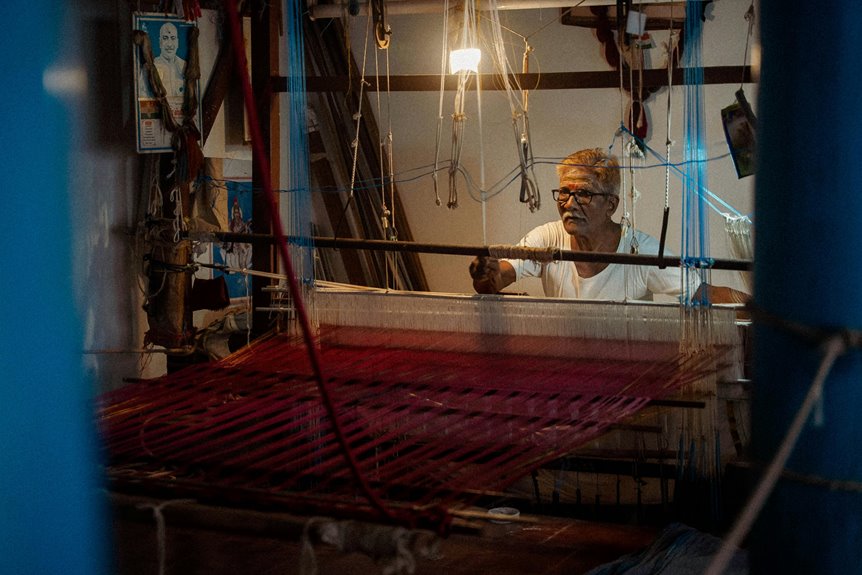
African Ikat fabric showcases a unique weaving tradition where artisans tie and dye threads before weaving to create vibrant, meaningful patterns. These textiles carry deep cultural significance, symbolizing identity, status, and heritage across African communities. Today, contemporary artists honor these traditions while blending in modern styles and eco-friendly techniques. By exploring this rich craft, you’ll discover how centuries-old methods and stories come alive in dynamic designs that continue to inspire global fashion and artistry.
Key Takeaways
- African Ikat weaving adapts Asian origins, blending local cultural symbols and colors into unique fabric patterns.
- The process involves tying and dyeing threads before weaving, requiring precise resist-dye techniques for intricate designs.
- Ikat textiles symbolize identity, social status, and heritage, with patterns reflecting clan affiliations and cultural values.
- Contemporary African artists revive Ikat by merging traditional techniques with modern fashion and eco-friendly practices.
- Proper care includes gentle hand washing in cold water, avoiding sun exposure, and pairing Ikat with neutral tones for styling.
Origins and History of Ikat in Africa
Although Ikat weaving originated in Asia, it found a unique and vibrant expression in Africa, where local artisans adapted the technique to their own cultural contexts.
When you explore African Ikat, you’ll notice how communities integrated their symbols and colors, making the fabric distinctly their own. You’ll find that Ikat arrived through trade routes and cultural exchanges, blending with indigenous textile traditions.
As you study its history, you’ll see how African Ikat became more than just fabric—it turned into a medium for storytelling and status display. You’ll appreciate how this weaving style evolved over centuries, reflecting the continent’s diverse societies.
Techniques Used in African Ikat Weaving
Understanding the rich history of African Ikat helps you appreciate the skill behind its creation.
When you explore the techniques used in African Ikat weaving, you’ll notice the intricate process of tying and dyeing threads before weaving. Artisans carefully bind sections of yarn with resistant materials, controlling which parts absorb dye and which remain untouched. This resist-dyeing technique requires precision because the patterns emerge only after weaving the dyed threads together.
You’ll also find that different regions use variations in tying methods—some wrap the yarn with raffia, others use wax or tightly wound threads. As you watch the weaving, you’ll see how alignment is essential, demanding patience and expertise to create the characteristic blurred yet striking Ikat designs.
Distinctive Patterns and Motifs in African Ikat
You’ll notice that African Ikat fabrics feature symbolic design elements rich with cultural meaning.
These patterns often vary from region to region, reflecting local traditions and stories.
Let’s explore how these distinctive motifs bring each piece to life.
Symbolic Design Elements
Patterns in African Ikat carry deep meanings that go beyond their visual appeal. When you look closely, you’ll notice that each motif tells a story or represents cultural values like fertility, protection, or community.
These symbolic design elements often connect you to ancestral heritage and spiritual beliefs. For example, geometric shapes might symbolize unity or balance, while intricate lines can indicate social status or historical events.
As you explore the fabric, you’ll see how the deliberate arrangement of these symbols communicates identity and tradition. Understanding these meanings lets you appreciate African Ikat not just as art but as a living language woven into every thread, inviting you to connect with the continent’s rich cultural narratives.
Regional Pattern Variations
Distinctive motifs and designs in African Ikat vary widely across regions, reflecting the diverse cultures and histories of the continent.
When you explore West African Ikat, you’ll notice bold geometric shapes and repeating diamond patterns that symbolize unity and strength.
In East Africa, particularly in Tanzania, the designs often incorporate more organic shapes and vibrant colors, inspired by nature and local folklore.
Central African Ikat tends to feature intricate zigzags and stripes, representing community ties and ancestral stories.
As you compare these regional styles, you’ll see how each pattern carries unique meanings and showcases local weaving techniques.
Understanding these variations helps you appreciate the rich cultural tapestry embedded in every Ikat piece across Africa.
Cultural Significance of Ikat Textiles Across African Communities
Ikat textiles hold deep cultural meaning for many African communities, serving as more than just decorative fabric. When you encounter these vibrant patterns, you’re witnessing symbols of identity, history, and social status.
In some regions, specific ikat designs represent clan affiliations or ancestral lineage, helping you connect with your roots. The intricate process of creating ikat also reflects values like patience and skill, which communities take pride in.
By wearing or displaying ikat cloth, you participate in a living tradition that preserves cultural heritage. These textiles often communicate messages without words, letting you express belonging or respect.
The Role of Ikat in Traditional African Ceremonies
In many African communities, ikat fabric plays an essential role in traditional ceremonies, marking important life events and celebrations.
When you attend these events, you’ll notice ikat garments symbolize status, heritage, and spiritual beliefs. The fabric’s intricate patterns aren’t just decorative—they convey messages and cultural values passed down through generations.
You’ll often see ikat used in:
- Weddings, where it represents unity and prosperity.
- Naming ceremonies, symbolizing blessings for the newborn.
- Funerals, to honor ancestors and express mourning respectfully.
Contemporary Artists and the Revival of African Ikat
You’ll see how modern Ikat innovators are bringing fresh life to this traditional craft while preserving its cultural roots.
You can explore how artists blend heritage with contemporary fashion, making Ikat relevant today.
Let’s look at how their work sparks a revival that honors the past and inspires the future.
Modern Ikat Innovators
Although rooted in centuries-old traditions, African Ikat has found new life through the creativity of contemporary artists who blend heritage with innovation.
You’ll notice how these modern innovators push boundaries by experimenting with colors, patterns, and techniques while honoring Ikat’s essence. They’ve transformed Ikat fabric from traditional attire to global fashion statements and art pieces.
When you explore their work, you’ll see they focus on:
- Reviving traditional dyeing methods with eco-friendly practices
- Integrating Ikat into avant-garde fashion and home décor
- Collaborating with local artisans to sustain craftsmanship
Cultural Heritage Preservation
Building on the innovations of modern artists, the revival of African Ikat also plays an essential role in preserving cultural heritage.
When you explore this revival, you’ll see how contemporary weavers honor traditional patterns and techniques, ensuring they don’t fade away. These artists blend history with fresh creativity, keeping stories, symbols, and craftsmanship alive.
By supporting their work, you help sustain communities that rely on these skills for cultural identity and economic livelihood. You’ll notice the dedication to authenticity, as techniques are passed down through generations, preserving the fabric’s cultural significance.
Ikat in Fashion
As contemporary artists embrace African Ikat, they breathe new life into its intricate designs, making the fabric a vibrant force in modern fashion.
You’ll see Ikat patterns reimagined in bold clothing lines, accessories, and home décor, blending tradition with a fresh, trendy appeal. This revival brings attention to the craft, supporting artisans and preserving their heritage.
When you explore African Ikat in fashion, you’ll notice how it:
- Celebrates cultural identity with contemporary aesthetics
- Inspires sustainable, handmade fashion movements
- Bridges generations by merging old techniques with new styles
How African Ikat Influences Global Textile Design
When you explore global textile trends, you’ll notice African Ikat’s bold patterns and vibrant colors have left a lasting mark.
Designers worldwide draw inspiration from its distinctive resist-dye technique, incorporating its geometric motifs and rich hues into contemporary collections. You’ll see African Ikat influencing everything from high fashion runways to home décor textiles, blending tradition with modern aesthetics.
African Ikat’s resist-dye artistry shapes vibrant, geometric designs seen in fashion and home décor worldwide.
Its ability to tell stories through patterns appeals to creatives seeking authenticity and cultural depth in their work. By embracing African Ikat, you contribute to preserving a heritage while pushing textile innovation forward.
This fabric’s unique visual language challenges and enriches global design, proving that cultural craftsmanship can resonate far beyond its origins, inspiring fresh ideas and new artistic directions everywhere.
Caring for and Styling African Ikat Fabrics
Though African Ikat fabrics are striking and durable, you’ll want to handle them with care to preserve their vibrant patterns and texture.
Always wash them gently by hand in cold water with mild detergent to avoid color bleeding. Avoid wringing or twisting to maintain the fabric’s integrity.
When drying, lay the fabric flat or hang it in shade to prevent sun damage.
For styling, Ikat’s bold designs pair beautifully with simple, solid-colored pieces to let the patterns stand out. You can:
- Mix Ikat with neutral tones for balanced outfits.
- Use Ikat as statement accessories like scarves or headwraps.
- Combine different Ikat pieces carefully for a coordinated look.
Frequently Asked Questions
What Types of Fibers Are Commonly Used in African Ikat Fabric?
You might think synthetic fibers dominate, but traditional African ikat fabric mostly uses natural fibers like cotton and silk. These fibers give the fabric its strength and vibrant dye absorption, keeping the patterns bold and lasting.
How Long Does It Take to Create a Single Piece of African Ikat?
You’ll find that creating a single piece of ikat can take days or even weeks, depending on complexity. The process involves meticulous dyeing and weaving, so patience and skill are essential to achieve the vibrant patterns.
Are There Specific Regions in Africa Known for Ikat Production?
Imagine vibrant threads weaving stories—yes, you’ll find ikat mainly in West Africa, especially Nigeria and Mali. These regions proudly craft ikat, blending culture and skill, so you’ll appreciate every intricate, colorful design they create.
Can African Ikat Fabrics Be Machine Washed Safely?
You can machine wash African ikat fabrics, but you should use a gentle cycle with cold water to protect the colors and fibers. Always avoid harsh detergents and air dry to keep the fabric looking vibrant and intact.
What Are Common Uses of African Ikat Outside of Clothing?
You’ll find ikat’s charm spreading beyond wardrobes—people often use it to jazz up home decor, from curtains to cushion covers. It also shines in wall hangings and accessories, adding a touch of cultural flair effortlessly.