
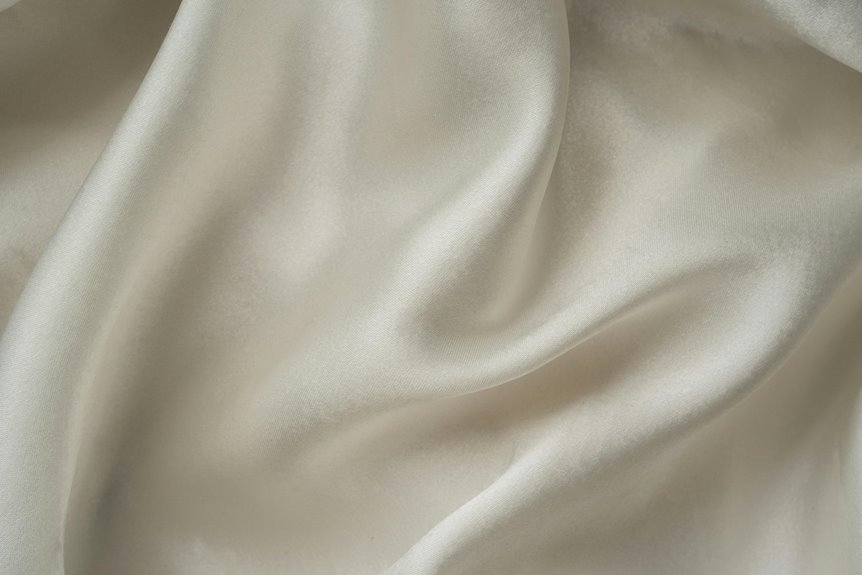
You’ll find Katan silk fabric rich with nature-inspired motifs like lotus, peacock, and paisley that symbolize beauty, purity, and growth. Its designs blend traditional floral patterns with modern geometric shapes, enhanced by vibrant colors such as royal blue, bright red, and gold. Metallic threads add sparkle, while handwoven borders and embellishments bring luxurious detail. Whether you prefer classic elegance or contemporary flair, exploring these varied designs reveals the fabric’s timeless artistry and cultural depth.
Key Takeaways
- Katan silk fabrics prominently feature traditional motifs like paisley, lotus, peacock, and elephant symbolizing cultural heritage and elegance.
- Geometric patterns such as triangles, diamonds, and hexagons add modern visual harmony and design versatility to Katan silk.
- Metallic zari threads, often gold or silver, outline motifs to enhance depth, luxury, and festive appeal in Katan silk designs.
- Rich, vibrant color palettes including royal blue, bright red, lush green, and warm yellow amplify Katan silk’s natural sheen and elegance.
- Handwoven craftsmanship with intricate zari work and embellishments like embroidery and mirror work enrich Katan silk’s texture and aesthetic.
Traditional Floral Motifs in Katan Silk
While exploring Katan silk fabric designs, you’ll notice that traditional floral motifs play a central role. These designs often feature intricate, nature-inspired patterns like lotus, jasmine, and mango blossoms.
Traditional floral motifs like lotus and jasmine beautifully define Katan silk fabric designs.
You’ll find that artisans emphasize delicate curves and fine detailing, which highlight the fabric’s lustrous texture. When you wear Katan silk adorned with these motifs, you carry a piece of cultural heritage that symbolizes beauty and elegance.
The floral patterns aren’t just decorative; they tell stories rooted in history and tradition. As you examine these fabrics, you’ll appreciate how each petal and vine is carefully woven to create a harmonious, timeless design.
This craftsmanship makes Katan silk a favored choice for special occasions and celebrations.
Geometric Patterns on Katan Fabric
Geometric patterns on Katan fabric bring a modern edge to this traditional silk. When you choose Katan with geometric designs, you get a blend of classic texture and contemporary style.
These patterns add structure and rhythm, making the fabric versatile for various occasions.
Here’s what makes geometric patterns on Katan stand out:
- Symmetry and Repetition: They create visual harmony that appeals to your eye.
- Bold Shapes: Triangles, diamonds, and hexagons give a crisp, clean look.
- Contrasting Colors: They highlight the sharp edges and enhance vibrancy.
- Minimalistic Appeal: You get elegance without overwhelming detail, perfect for modern fashion.
Using geometric designs, you can effortlessly balance tradition with today’s trends in your wardrobe.
Use of Metallic Threads in Katan Silk Designs
Adding metallic threads to Katan silk designs elevates the fabric’s elegance and gives it a radiant glow you can’t miss.
When you choose Katan silk woven with zari or other metallic threads, you’re embracing a tradition that highlights intricate craftsmanship. These threads catch the light beautifully, creating subtle shimmer effects that enhance patterns without overwhelming the silk’s natural texture.
You’ll often see gold or silver threads outlining motifs or filling in delicate details, adding depth and richness. Incorporating metallic threads also boosts the fabric’s versatility, making it perfect for festive occasions or formal wear.
When you wear Katan silk with metallic accents, you’ll notice how it instantly adds a luxurious touch, making your outfit stand out with timeless sophistication.
Vibrant Color Palettes for Katan Silk Sarees
Color plays an essential role in bringing Katan silk sarees to life, and vibrant palettes make these fabrics truly unforgettable. When you choose a Katan saree, the rich hues instantly catch your eye, elevating the saree’s elegance and your overall look.
You’ll find that these sarees often feature deeply saturated colors that highlight the fabric’s natural sheen.
Here are four vibrant palettes commonly used in Katan silk sarees:
- Royal blues and deep purples that exude sophistication.
- Bright reds and oranges for a bold, festive vibe.
- Lush greens paired with gold accents for a regal appeal.
- Warm yellows and pinks that add cheerful energy.
These color choices guarantee your Katan saree stands out at any occasion.
Nature-Inspired Themes in Katan Weaves
While the vibrant hues of Katan silk sarees draw you in, it’s the nature-inspired themes woven into the fabric that truly captivate your attention.
You’ll notice delicate floral motifs, graceful leaves, and elegant vines intricately embroidered or woven into the silk, bringing a fresh, organic charm to the textile. These designs don’t just add beauty—they tell a story of nature’s bounty, connecting you to the environment with every drape.
Whether it’s subtle blossoms or bold foliage patterns, the craftsmanship highlights nature’s elegance while maintaining Katan silk’s luxurious texture.
When you choose a Katan saree featuring these themes, you embrace artistry that celebrates life, growth, and harmony—making your attire not just beautiful, but meaningful too.
Intricate Paisley Patterns on Katan Silk
You’ll notice that paisley patterns on Katan silk carry rich origins rooted in history and culture.
Pay attention to how color combinations bring these intricate motifs to life.
Understanding the weaving techniques helps you appreciate the craftsmanship behind every design.
Origins of Paisley Motifs
Although paisley motifs have become synonymous with Katan silk, their origins trace back much further than the fabric itself. You’ll find these teardrop-shaped patterns, known as “boteh” or “buta,” rooted in ancient Persian and Indian art, symbolizing life and eternity.
When you explore Katan silk, you’re witnessing centuries of cultural exchange.
Here are key points to understand the origins of paisley motifs:
- Originated in Persia around 224 AD, representing fertility and renewal.
- Spread to India, especially Kashmir, where artisans refined the design.
- European fascination during the 18th century popularized the motif.
- The Scottish town of Paisley mass-produced these patterns, giving the design its Western name.
Understanding this history enriches your appreciation of paisley on Katan silk.
Color Combinations in Paisley
The rich history of paisley motifs sets the stage for exploring how color brings these intricate patterns to life on Katan silk. You’ll notice that vibrant contrasts or subtle harmonies both highlight the paisley’s curves and details beautifully. Designers often play with shades to evoke tradition or modernity, making each piece unique.
Here’s a quick look at popular color combos used in paisley on Katan silk:
| Base Color | Paisley Color | Effect |
|---|---|---|
| Deep Navy | Gold | Regal & Classic |
| Ivory | Pastel Pink | Soft & Elegant |
| Maroon | Turquoise | Bold & Vibrant |
| Olive Green | Burnt Orange | Earthy & Warm |
| Black | Silver | Sleek & Sophisticated |
Weaving Techniques for Paisley
Mastering intricate paisley patterns on Katan silk demands exceptional weaving techniques that balance precision with artistry.
When you work with Katan silk, you’ll notice the fabric’s crisp texture allows for detailed motifs without losing elegance.
To weave paisley designs effectively, you need to:
- Utilize jacquard looms for precise control over complex patterns.
- Employ double- or multi-shaft weaving to create depth and dimension.
- Maintain consistent tension to prevent distortion of the paisley shapes.
- Integrate contrasting threads carefully to highlight fine details and curves.
Minimalist Designs for Modern Katan Textiles
When you explore minimalist designs for modern Katan textiles, you’ll find that simplicity enhances the fabric’s natural elegance.
These designs focus on clean lines, subtle textures, and restrained color palettes, allowing the luxurious sheen of Katan silk to take center stage. You’ll notice how understated patterns or solid colors highlight the fabric’s smooth finish without overwhelming it.
Minimalist Katan pieces often use muted tones like soft pastels, creams, or deep neutrals, perfect for contemporary tastes. When you choose minimalist designs, you’re embracing versatility—these fabrics effortlessly complement both casual and formal wear.
Cultural Symbols and Their Representation in Katan Silk
While minimalist designs highlight Katan silk‘s elegance through simplicity, cultural symbols bring a rich layer of meaning and tradition to these fabrics.
When you choose a Katan silk piece adorned with cultural motifs, you’re embracing stories woven into every thread. These symbols often represent heritage, beliefs, and regional identity.
Here are four common cultural symbols you’ll find in Katan silk designs:
- Paisley (Mango Motif) – Symbolizes fertility and growth.
- Peacock – Represents beauty and pride.
- Lotus – Stands for purity and spiritual awakening.
- Elephant – Denotes strength and wisdom.
Embellishments and Borders in Katan Fabric
Borders and embellishments add a striking finishing touch to Katan silk fabrics, enhancing their overall appeal.
When you choose Katan silk, you’ll notice how intricate zari work, delicate embroidery, and handwoven motifs frame the fabric beautifully. These borders often feature gold or silver threads, creating a shimmering contrast against the smooth silk.
Embellishments like sequins, beads, and subtle mirror work further elevate the richness of the material. You’ll find that these details not only highlight the craftsmanship but also define the garment’s style and occasion suitability.
Whether it’s a broad, ornate border or a slim, understated edge, these elements provide balance and elegance, making your Katan silk piece truly exceptional and visually enchanting.
Combining Katan Silk With Other Textiles for Unique Designs
The intricate embellishments and borders on Katan silk create a stunning foundation, but pairing this luxurious fabric with other textiles can bring even more depth and creativity to your designs.
You can experiment with textures and colors to make your pieces truly unique. Here are some ways to combine Katan silk effectively:
- Cotton blends: Add softness and breathability, perfect for casual wear.
- Velvet accents: Introduce richness and contrast for evening outfits.
- Chiffon overlays: Create delicate layers and fluid movement.
- Brocade trims: Enhance traditional appeal with intricate patterns.
Frequently Asked Questions
How Should Katan Silk Fabric Be Cared for and Cleaned?
You’ll want to treat katan silk like morning dew on fragile petals—gently. Don’t machine wash it; instead, hand wash with cold water and mild detergent. Always air dry away from direct sunlight to keep it vibrant.
What Is the History and Origin of Katan Silk Weaving?
You’ll find Katan silk weaving originated in India centuries ago, blending fine silk threads for durability and shine. Skilled artisans developed intricate patterns, making it prized in royal garments and traditional celebrations.
Where Can Authentic Katan Silk Fabric Be Purchased?
They say, “Quality speaks louder than words.” You can purchase authentic Katan silk fabric from reputed Indian silk markets, trusted online boutiques, and artisan cooperatives specializing in handwoven textiles—always check for certifications and reviews before buying.
How Durable Is Katan Silk Compared to Other Silks?
You’ll find katan silk is quite durable compared to other silks because of its tightly woven structure. It resists wear and tear better, so you can enjoy its beauty longer without worrying about quick damage or fraying.
What Occasions Are Best Suited for Wearing Katan Silk Garments?
You’ll find katan silk perfect for weddings, festive celebrations, and formal events. Its rich texture and elegant sheen make it ideal when you want to stand out and embrace traditional luxury with a modern touch.