
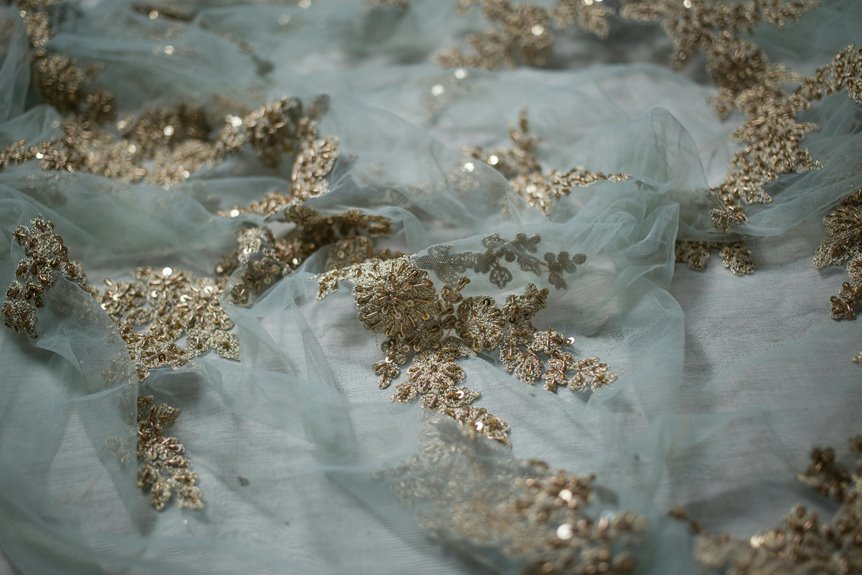
When sourcing high-quality lace fabric from China, focus on regions like Guangdong and Zhejiang known for craftsmanship and variety. Check for soft texture, precise patterns, and durable fine threads, often made from cotton or silk. Verify certifications like OEKO-TEX and ISO 9001 to guarantee quality and safety. Negotiate pricing and MOQ clearly while considering shipping logistics. Custom options and strong supplier relationships can elevate your projects. Exploring these areas will help you confidently secure the best lace for your needs.
Key Takeaways
- Identify major lace-producing regions in China like Guangdong, Zhejiang, and Jiangsu for quality and variety.
- Evaluate lace quality by checking texture softness, pattern precision, thread durability, and consistent thickness.
- Negotiate prices and minimum order quantities by understanding supplier costs and proposing realistic terms.
- Verify supplier certifications like OEKO-TEX, ISO 9001, and REACH to ensure safety and environmental compliance.
- Explore customization options including patterns, colors, and fabric compositions while building strong, communicative supplier relationships.
Understanding Different Types of Lace Fabrics
Anyone interested in sourcing lace fabric from China should first understand the different types available.
You’ll encounter various lace styles like Chantilly, Alençon, and Guipure, each with its unique patterns and textures.
Chantilly lace features delicate floral designs on a fine mesh, perfect for elegant garments.
Chantilly lace offers delicate floral patterns on fine mesh, ideal for creating elegant and refined garments.
Alençon lace, known as the “Queen of lace,” has a raised cord outlining intricate motifs, giving it a dimensional look.
Guipure lace doesn’t have a net background; instead, it connects motifs with bars or plaits, offering a heavier and more structured feel.
Knowing these distinctions helps you choose the right lace for your project and communicate clearly with suppliers.
Familiarity with lace types guarantees you get exactly what you need without surprises.
Key Characteristics of High-Quality Lace
When choosing lace fabric, pay close attention to its texture and how it feels against your skin.
You’ll also want to check the pattern for sharpness and fine details that show skilled craftsmanship.
Finally, consider the durability and quality of the threads to guarantee your lace lasts.
Fabric Texture and Feel
The texture of lace fabric reveals much about its quality and craftsmanship. When you touch high-quality lace, it should feel soft and smooth, not rough or scratchy. You’ll notice a delicate yet durable hand, indicating strong fibers and skilled weaving.
Avoid lace that feels stiff or overly synthetic, as it often lacks breathability and comfort. Good lace also has a consistent thickness throughout, without uneven or bulky spots.
When sourcing from China, ask suppliers about the fiber content—natural fibers like cotton or silk typically offer a more luxurious feel.
Pattern Precision and Detail
Although lace fabric’s texture is important, its pattern precision and detail truly define its quality. When sourcing lace from China, you should look closely at the intricacy of the design and how sharply the motifs are executed. High-quality lace features crisp, clear patterns without irregularities or blurred edges, which guarantees the fabric looks elegant and refined.
Here’s a quick comparison to help you identify top-tier lace:
| Feature | High-Quality Lace |
|---|---|
| Pattern Clarity | Sharp, well-defined motifs |
| Design Complexity | Intricate, detailed elements |
| Edge Finish | Clean, consistent outlines |
Focus on these details to guarantee the lace you choose stands out with superior craftsmanship and style.
Durability and Thread Quality
Since durability and thread quality directly impact how long your lace fabric lasts, you’ll want to pay close attention to these factors when sourcing from China.
High-quality lace uses strong, fine threads that resist fraying and maintain their shape after washing. When choosing suppliers, ask about the type of threads they use—cotton, polyester, or nylon—and how these influence the lace’s strength and flexibility.
Inspect samples for even thread tension and smooth finishes, which indicate better craftsmanship. Durable lace won’t snag easily and should handle wear without losing its intricate details.
Popular Lace Patterns and Designs in China
You’ll find that traditional Chinese lace often features intricate motifs like peonies and dragons, reflecting rich cultural symbolism.
At the same time, modern lace designs incorporate sleek, minimal patterns that appeal to contemporary tastes.
Understanding these styles helps you choose lace that fits your specific needs.
Traditional Chinese Lace Motifs
When you explore traditional Chinese lace motifs, you’ll find that they often draw inspiration from nature, mythology, and cultural symbols.
These motifs carry deep meanings and reflect centuries of artistry, making the lace more than just fabric—it’s a storytelling medium.
When sourcing lace, pay close attention to these classic patterns:
- Peonies – Symbolize wealth and honor, often featured in bold, intricate designs.
- Dragons – Represent power and protection, crafted with flowing, dynamic lines.
- Lotus Flowers – Stand for purity and enlightenment, commonly seen in delicate, symmetrical patterns.
- Phoenixes – Emblems of rebirth and grace, woven into elegant, soaring shapes.
Recognizing these motifs helps you select lace that truly embodies traditional Chinese aesthetics.
Modern Lace Design Trends
While traditional Chinese lace motifs celebrate history and symbolism, modern lace design trends in China embrace innovation and global influences.
When sourcing lace fabric, you’ll notice designers blending classic floral patterns with geometric shapes, creating fresh, eye-catching combinations. Popular designs now include abstract florals, intricate mesh overlays, and 3D embroidered elements that add texture and depth.
You’ll also find lace featuring metallic threads or subtle color gradients, reflecting contemporary fashion’s push toward bold yet elegant aesthetics. Chinese manufacturers are quick to adapt, offering customizable options that let you mix traditional craftsmanship with modern style.
Major Lace-Producing Regions in China
Although lace production spans several areas in China, certain regions have earned a reputation for exceptional quality and craftsmanship.
Some Chinese regions stand out for their superior lace quality and skilled craftsmanship.
When sourcing lace fabric, you’ll want to focus on these key regions to guarantee you get the best materials.
- Guangdong – Renowned for its advanced textile technology and variety of lace patterns.
- Zhejiang – Known for delicate, intricate lace designs with fine embroidery techniques.
- Jiangsu – Famous for combining traditional craftsmanship with modern production methods.
- Fujian – Specializes in lightweight, breathable lace ideal for fashion and home textiles.
How to Evaluate Lace Fabric Samples
Anyone sourcing lace fabric knows that evaluating samples carefully is essential to guarantee quality and suitability.
First, examine the fabric’s texture and weight—verify it feels consistent and matches your project’s needs. Check the lace’s pattern closely; it should be even and free from defects like snags or loose threads.
Test the stretch and recovery if the lace includes elastic fibers. Hold the sample up to light to assess transparency and thread density.
Don’t forget to evaluate colorfastness by rubbing the fabric with a damp white cloth. Finally, consider how the lace drapes and reacts to handling, since this affects garment construction.
Taking these steps helps you avoid surprises and guarantees you pick the right lace for your products.
Finding Reliable Lace Fabric Suppliers
After thoroughly evaluating lace fabric samples, the next step is finding suppliers you can trust to provide consistent quality.
You want partners who understand your standards and deadlines. Here’s how to identify reliable lace fabric suppliers in China:
- Check Certifications and Factory Audits – Verify their compliance with industry standards and ethical practices.
- Review Customer Feedback – Look for testimonials and ratings on platforms like Alibaba or Global Sources.
- Assess Communication Responsiveness – Reliable suppliers respond promptly and clarify your technical questions.
- Request Production Capacity Details – Confirm they can meet your order volumes without compromising quality.
Negotiating Prices and Minimum Order Quantities
When you start negotiating prices and minimum order quantities, understanding the supplier’s cost structure and production limits is essential. Don’t hesitate to ask detailed questions about material costs, labor, and order capacity. This insight helps you propose realistic terms. Be clear about your budget but remain flexible to build a good relationship. Use the table below to compare typical pricing and MOQ ranges:
| Supplier Type | Price per Meter (USD) | Minimum Order Quantity (Meters) |
|---|---|---|
| Small Manufacturer | $5 – $7 | 50 – 100 |
| Medium Supplier | $3 – $5 | 200 – 500 |
| Large Factory | $2 – $4 | 1000+ |
Aim for a balance where price meets quality and MOQ fits your needs, ensuring smooth collaboration.
Shipping and Import Considerations
Although sourcing high-quality lace fabric is essential, managing shipping and import logistics can make or break your supply chain.
You’ll want to plan carefully to avoid delays and unexpected costs. Here’s what to focus on:
- Choose the right shipping method: Air freight is faster but costlier; sea freight is economical for large orders but slower.
- Understand customs regulations: Each country has specific import duties and paperwork—make sure you comply to prevent hold-ups.
- Calculate total landed cost: Factor in shipping, duties, taxes, and handling fees to gauge your true expenses.
- Work with reliable freight forwarders: They’ll help coordinate shipments, track progress, and handle customs clearance efficiently.
Certifications and Quality Standards to Look For
Since quality and authenticity matter, you should look for specific certifications and standards when sourcing lace fabric from China. These guarantee that the fabric meets safety, environmental, and quality requirements. Common certifications include OEKO-TEX Standard 100, which guarantees the fabric is free from harmful substances, and ISO 9001, which certifies quality management processes. Also, look for compliance with REACH standards for chemical safety.
| Certification | Purpose | Why It Matters |
|---|---|---|
| OEKO-TEX Standard 100 | Safety from harmful substances | Guarantees skin-friendly fabric |
| ISO 9001 | Quality management | Consistent product quality |
| REACH Compliance | Chemical safety | Limits hazardous chemicals |
Checking these helps you avoid low-quality lace and protects your brand reputation.
Customization Options Available for Lace Fabrics
You can tailor lace fabrics to fit your exact needs by choosing specific patterns and designs.
Many suppliers also offer precise color matching services to guarantee your fabric perfectly complements your project.
Plus, you have options when it comes to fabric composition, letting you balance texture and durability.
Pattern and Design Choices
When selecting lace fabric from China, you’ll find a wide array of pattern and design choices that can be tailored to your specific needs.
Chinese manufacturers excel in offering intricate and diverse lace patterns, allowing you to pick or customize designs that match your project perfectly.
Here are key pattern and design options you can explore:
- Floral motifs – from delicate blossoms to bold blooms.
- Geometric patterns – including stripes, grids, and abstract shapes.
- Embellishments – such as sequins, beads, or metallic threads for added texture.
- Custom artwork – designers can create unique patterns based on your sketches or ideas.
Color Matching Services
How can you confirm your lace fabric perfectly matches your desired color palette? When sourcing from China, many suppliers offer precise color matching services. You’ll provide a sample or a Pantone code, and they’ll customize the dyeing process to meet your specifications. This guarantees consistent color across batches, essential for large orders or coordinated products.
Here’s a quick overview of common color matching options:
| Service Type | Description | Ideal For |
|---|---|---|
| Pantone Matching | Exact color replication using Pantone codes | Brand consistency |
| Sample Matching | Matches a physical fabric sample | Unique, non-standard shades |
| Digital Matching | Uses digital color files | Quick turnaround |
| Batch Consistency | Maintains color across multiple orders | Large-scale production |
| Custom Blending | Mixes dyes for exclusive hues | Limited edition products |
Leverage these services to get lace fabric that fits your vision precisely.
Fabric Composition Options
Although lace fabric is traditionally made from cotton or polyester, suppliers in China offer a wide range of composition options to suit your specific needs.
You can customize the fabric’s texture, durability, and feel by selecting different fiber blends. Here are four common composition options to evaluate:
- Cotton Blend: Soft, breathable, ideal for casual or summer wear.
- Polyester Blend: Durable, wrinkle-resistant, perfect for formal or everyday use.
- Nylon Mix: Adds stretch and strength, great for fitted designs.
- Rayon Combination: Offers a silky finish and vibrant color retention.
Tips for Building Long-Term Relationships With Chinese Suppliers
Building a strong partnership with your Chinese suppliers takes more than just placing orders—it requires consistent communication, mutual respect, and understanding of cultural nuances.
Make sure you stay in regular contact through preferred channels like WeChat or email, responding promptly to messages. Show appreciation for their efforts and respect their business practices, which helps build trust.
Visit their facilities when possible to strengthen the relationship and gain deeper insight into their operations. Be clear about your expectations and flexible during negotiations to find win-win solutions.
Finally, honor your commitments and pay on time to demonstrate reliability. These steps create a foundation for long-term collaboration, ensuring you consistently receive high-quality lace fabric while fostering a positive, productive partnership.
Frequently Asked Questions
What Are the Environmental Impacts of Lace Fabric Production in China?
You’ll find lace fabric production in China uses significant water and energy, often releasing chemical dyes into waterways. This impacts local ecosystems, so choosing suppliers committed to sustainable practices can help reduce environmental harm.
How Does Chinese Lace Fabric Compare to Lace From Other Countries?
You might be surprised—Chinese lace often matches or beats other countries in quality while offering competitive prices. Its craftsmanship is impressive, but you’ll want to contemplate design variety and sourcing ethics before deciding.
What Are Common Defects to Avoid in Lace Fabric?
You should watch out for holes, uneven patterns, loose threads, and color inconsistencies in lace fabric. Avoid fabric with weak spots or fraying edges, as these defects can ruin your project’s look and durability.
Can Lace Fabric Be Dyed After Purchase?
You might think dyeing lace after purchase is tricky, but you can actually dye it if it’s made from natural fibers. Just test a small piece first, and avoid synthetic blends to prevent damage or uneven color.
What Are Typical Lead Times for Custom Lace Orders?
You’ll usually see lead times between 2 to 6 weeks for custom lace orders, depending on complexity and quantity. Make sure to communicate clearly with your supplier to avoid delays and get accurate timelines.