
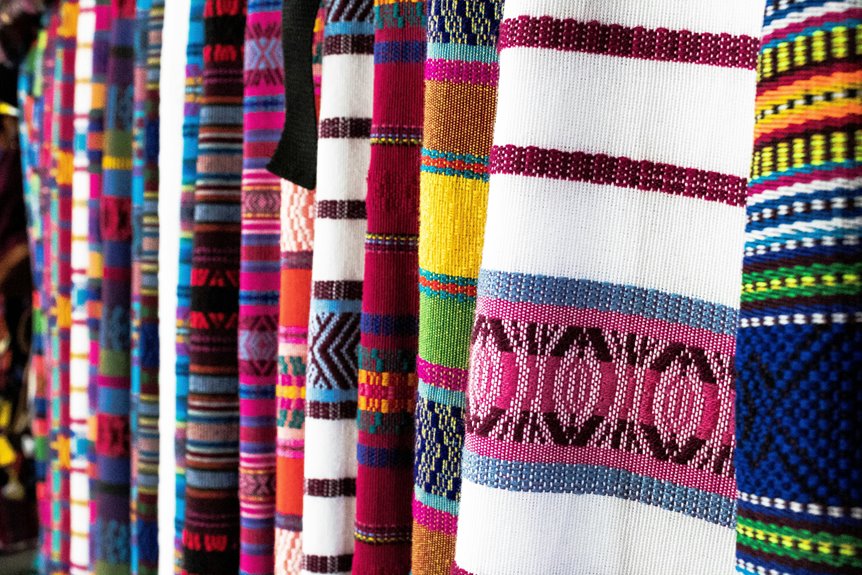
You’ll love how Robert Allen Ikat fabrics bring vibrant patterns and global artistry to your space. Using a unique dyeing method, these fabrics feature blurred, watercolor-like motifs in bold geometric or tribal designs. Their color palettes mix rich jewel tones with soft neutrals, perfect for upholstery, window treatments, or accent pieces. They add texture and personality while offering durable, easy-care options. Keep exploring to uncover tips for styling and maintaining these stunning fabrics.
Key Takeaways
- Robert Allen Ikat fabrics showcase bold, global-inspired patterns with geometric and tribal motifs for vibrant, distinctive decor accents.
- Their color palettes mix vibrant jewel tones, rich blues, warm earth tones, and soft pastels to suit various interior styles.
- Ikat fabrics are versatile, ideal for upholstery, drapery, decorative pillows, and fashion accessories, adding texture and cultural flair.
- The Ikat dyeing technique produces blurred, watercolor-like patterns by resist-dyeing yarn sections before weaving.
- Proper care involves gentle washing, avoiding harsh detergents, air drying away from sunlight, and low-heat ironing to preserve fabric vibrancy.
Understanding the Ikat Dyeing Technique
Although the Ikat dyeing technique may seem complex at first, you’ll find it fascinating once you understand its process.
You start by tightly binding sections of yarn before dyeing, which resists color in those areas. This selective binding creates intricate patterns once the yarns are woven into fabric.
Tightly binding yarn sections before dyeing creates distinctive patterns that come to life in the woven fabric.
You’ll notice that the design emerges gradually because the dye only colors the exposed yarn portions. When the threads are carefully aligned during weaving, the characteristic blurred, almost watercolor-like motifs appear.
The key is precision—both in tying the yarns and in weaving them back together. This resist-dyeing method allows for unique patterns that can’t be replicated by printing or embroidery.
Once you grasp these steps, you’ll appreciate the craftsmanship behind every Ikat piece you see.
Signature Robert Allen Ikat Patterns
You’ll notice Robert Allen Ikat patterns stand out with their bold, distinctive motifs that add character to any space.
The color palettes often blend vibrant hues with subtle tones, creating a balanced and eye-catching design.
Let’s explore how these signature elements make their fabrics unique.
Distinctive Ikat Motifs
Distinctive Ikat motifs capture the eye with their bold, blurred patterns that blend tradition and innovation.
When you explore Robert Allen Ikat fabrics, you’ll notice motifs inspired by global cultures, featuring geometric shapes, abstract florals, and tribal elements. These patterns aren’t just decorative; they tell a story through their intentional irregularities, a hallmark of the Ikat dyeing process.
You’ll find repeating diamond, chevron, and medallion designs that add dynamic movement to any space. Whether you choose a large-scale motif for a statement piece or smaller, intricate patterns for subtle texture, these fabrics bring depth and character.
Color Palette Trends
How do color choices shape the impact of Ikat patterns in your space? With Robert Allen Ikat fabrics, color palettes play an essential role in setting the mood and defining style.
You’ll find vibrant jewel tones that energize, as well as muted neutrals that bring calm sophistication. These trends help you tailor Ikat patterns to your unique décor needs, whether for bold statements or subtle accents.
Consider these color palette trends to elevate your design:
- Rich blues and teals evoke tranquility and depth
- Warm earth tones create cozy, inviting atmospheres
- Soft pastels add a gentle, contemporary touch
- High-contrast black and white designs deliver modern drama
Color Palettes and Their Impact
When choosing Ikat fabrics, you’ll notice how warm and cool tones create different moods in your space.
Vibrant shades can energize a room, while muted colors bring calm and subtlety.
Pairing complementary colors thoughtfully will make your patterns truly stand out.
Warm Vs Cool Tones
Although choosing between warm and cool tones might seem simple, understanding their impact on ikat fabrics can transform your design choices.
Warm tones like reds, oranges, and yellows evoke energy and comfort, making your space feel inviting and lively. Cool tones such as blues, greens, and purples offer calmness and relaxation, perfect for creating a serene atmosphere.
When selecting ikat patterns, consider how these tones influence mood and harmony in your room.
- Warm tones enhance vibrancy and stimulate social interaction
- Cool tones promote tranquility and mental clarity
- Mixing both can balance energy and calmness effectively
- Your choice affects not just color but emotional ambiance
Vibrant Vs Muted Shades
Why choose between vibrant and muted shades when working with ikat fabrics? Both offer unique ways to express personality and style.
Vibrant shades bring energy and boldness to a space or garment, instantly catching the eye and creating a lively atmosphere. They’re perfect if you want to make a statement or add a pop of color.
Muted shades, on the other hand, provide subtlety and sophistication, blending seamlessly with various decor styles or clothing. They help create a calm, understated look that’s timeless and versatile.
When selecting ikat fabrics, consider the mood you want to evoke. Your choice between vibrant and muted shades will shape the overall impact, making your ikat piece either a striking focal point or a harmonious complement.
Complementary Color Combinations
Choosing between vibrant and muted shades sets the tone, but how you combine these colors can elevate your ikat fabric’s impact even further.
Complementary color combinations create dynamic contrasts that make patterns pop, giving your space a lively and balanced feel. When you pair colors opposite each other on the color wheel, like blue and orange or red and green, you enhance the fabric’s visual interest without overwhelming your décor.
Consider these tips to use complementary colors effectively:
- Use one color as dominant and the other as an accent to maintain harmony
- Experiment with different shades and tints for subtle or bold effects
- Balance warm and cool tones to create depth
- Match complementary colors with neutral backgrounds for a refined look
This approach makes your ikat fabric a true statement piece.
Using Ikat Fabrics for Upholstery
When you incorporate Ikat fabrics into your upholstery, you bring vibrant patterns and rich cultural heritage into your living space.
Ikat’s distinctive blurred designs add texture and visual interest to chairs, sofas, and ottomans. Choose Ikat fabric with durable fibers like cotton blends or synthetic options to guarantee longevity, especially for frequently used furniture.
Pairing bold Ikat patterns on accent chairs with solid-colored pieces balances energy without overwhelming the room. You can reupholster dining chairs or create statement headboards using Ikat to infuse personality.
Just remember to take into account fabric weight and abrasion resistance to maintain comfort and durability.
Using Ikat for upholstery offers a unique way to showcase craftsmanship and culture while enhancing your décor with timeless style.
Incorporating Ikat in Window Treatments
Although Ikat fabrics are often seen on upholstery, they also make stunning window treatments that instantly elevate any room.
When you incorporate Ikat into curtains or Roman shades, you bring vibrant patterns and rich textures right where natural light flows. This fabric’s bold designs can complement or contrast your existing décor, making your windows focal points.
To get the most from Ikat window treatments, consider:
- Choosing colors that enhance your room’s palette without overwhelming it
- Opting for lined curtains to protect fabric and control light
- Balancing bold Ikat patterns with simpler furniture and walls
- Using Ikat in smaller window treatments for subtle elegance or larger ones for dramatic impact
These tips help you create windows that are both functional and visually enchanting.
Creating Accent Pieces With Ikat
Three simple accent pieces can transform your space with Ikat’s vibrant patterns and textures. Start by adding Ikat throw pillows to your sofa or bed; they instantly introduce color and cultural flair.
Next, consider an Ikat upholstered ottoman or footstool—this functional piece adds pattern without overwhelming the room.
Finally, incorporate Ikat fabric into a framed wall art or fabric panel for a unique focal point. These accents work well because they’re easy to swap out when you want a fresh look.
Care and Maintenance Tips for Ikat Fabrics
Since Ikat fabrics feature intricate patterns and delicate dyes, you’ll want to handle them with care to preserve their beauty.
Ikat fabrics showcase intricate patterns and delicate dyes, requiring gentle care to maintain their stunning appearance.
Always wash Ikat pieces gently by hand or use a delicate cycle with cold water to prevent color bleeding. Avoid harsh detergents; opt for mild soaps instead.
When drying, skip the dryer—lay your fabric flat or hang it away from direct sunlight to prevent fading. Iron on low heat, placing a cloth between the iron and fabric to protect the fibers.
- Wash separately to avoid dye transfer
- Avoid bleach and fabric softeners
- Store in a cool, dry place away from sunlight
- Handle with clean hands to prevent stains
Following these tips will keep your Ikat fabrics vibrant and lasting longer.
Frequently Asked Questions
Where Are Robert Allen Ikat Fabrics Manufactured?
You’ll find Robert Allen Ikat fabrics are primarily manufactured in India and Southeast Asia. They combine traditional craftsmanship with modern techniques, ensuring each fabric maintains authentic patterns while meeting contemporary quality standards you expect.
What Is the Price Range of Robert Allen Ikat Fabrics?
You might think Robert Allen Ikat fabrics are pricey, but they’re actually quite affordable. You’ll find prices generally range from $20 to $60 per yard, depending on the pattern complexity and fabric quality you choose.
Are Robert Allen Ikat Fabrics Eco-Friendly or Sustainably Produced?
You won’t find all Robert Allen Ikat fabrics labeled as eco-friendly, but many use responsibly sourced materials and sustainable practices. Always check product details, as the brand is increasingly focusing on sustainability in their textile production.
Can Robert Allen Ikat Fabrics Be Used for Clothing?
Wondering if you can wear ikat fabrics? You absolutely can! These vibrant, patterned textiles lend themselves well to clothing, offering unique style and comfort. Just make sure to choose the right weight for your garment.
Do Robert Allen Ikat Fabrics Come With Warranty or Guarantees?
You usually won’t find warranties on Robert Allen Ikat fabrics, but you can check their return policy for defects. Always inspect the fabric carefully when you get it, so you’re confident in your purchase.