
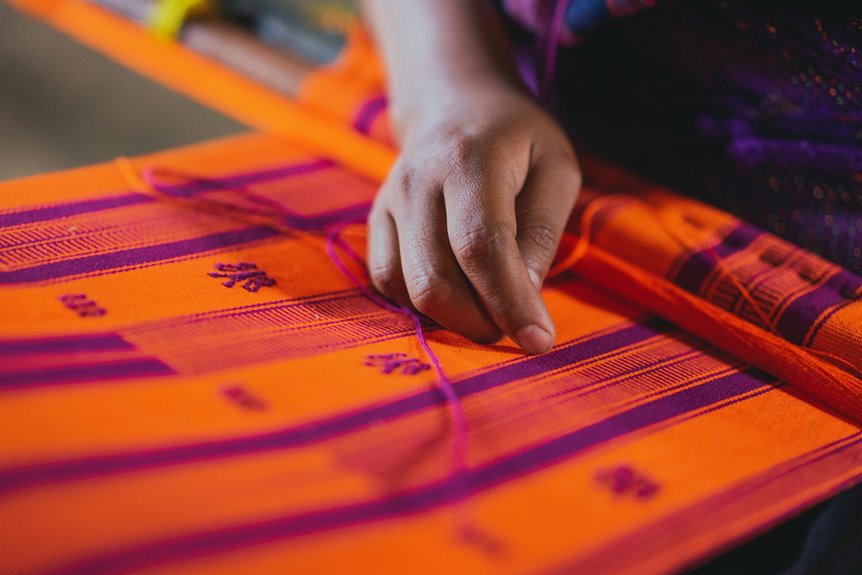
To embroider on jute fabric, choose sharp needles sized 75/11 to 90/14 and strong, thick threads like cotton floss or polyester for durability. Prepare the fabric by cleaning, ironing on low heat, and stabilizing it to prevent puckering. Use sturdy stitches like backstitch, satin, and chain stitch for bold designs. Handle and store jute carefully to avoid creases and damage. Mastering these basics sets a solid foundation, revealing more advanced techniques and care tips ahead.
Key Takeaways
- Choose sharp embroidery needles (75/11 to 90/14) and strong, thick threads like cotton floss or polyester for durability on jute fabric.
- Stabilize jute fabric before stitching to prevent shifting and puckering, ensuring clean, precise embroidery results.
- Use durable stitches such as backstitch, satin stitch, and chain stitch for strong outlines, filled areas, and decorative texture on jute.
- Prepare jute by cleaning, ironing on low heat, and avoiding fraying edges through careful handling and edge finishing.
- Store embroidered jute in breathable bags, avoid folding, and keep away from moisture and direct sunlight to maintain quality and longevity.
Understanding the Properties of Jute Fabric
Jute fabric offers a unique blend of strength and breathability that makes it ideal for embroidery projects. When you work with jute, you’ll notice its natural coarseness and rough texture, which provides an excellent grip for your stitches.
It’s a strong fiber, so your embroidery will hold up well over time, even with frequent handling. Keep in mind, jute is a natural, biodegradable material, which means it’s eco-friendly but also slightly prone to fraying at the edges.
Its loose weave can vary, so you should examine your fabric closely before starting. Because jute is breathable, it helps your embroidery stay fresh and prevents moisture buildup.
Understanding these properties will help you plan your project effectively and guarantee your designs look their best.
Choosing the Right Needles and Threads for Jute
The texture and strength of the fabric influence the tools you’ll need for your embroidery. Jute’s coarse fibers demand sturdy needles and threads that can withstand tension without damaging the material. Here’s what to take into account:
- Needle Type: Use a sharp or embroidery needle sized between 75/11 and 90/14. These penetrate jute easily without causing excessive fraying.
- Thread Selection: Opt for strong, thick threads like cotton embroidery floss, perle cotton, or polyester. These maintain durability and stand out against jute’s rough surface.
- Thread Weight: Choose a heavier thread weight (e.g., 40 or 50 wt) to guarantee your stitches are visible and resilient on the coarse fabric.
Selecting the right needles and threads helps you achieve clean, lasting embroidery while respecting jute’s unique texture.
Preparing Jute Fabric for Embroidery
Before you start stitching, make certain to clean and iron your jute fabric to create a smooth surface.
You’ll also want to stabilize the fabric to prevent shifting or puckering during embroidery.
Taking these steps guarantees your design stays crisp and your work looks professional.
Cleaning and Ironing
Although natural fibers like jute are sturdy, they’ll still carry dust and creases that can interfere with embroidery.
To guarantee your work looks crisp and professional, you need to clean and iron the fabric properly before stitching.
Follow these steps for effective cleaning and ironing:
- Spot Clean or Hand Wash: Use mild soap and cold water to gently remove dirt without weakening the fibers. Avoid machine washing as it can cause distortion.
- Air Dry Completely: Lay your jute flat or hang it to dry in a shaded area to prevent shrinking or hardening.
- Iron on Low Heat: Place a thin cloth between the iron and jute, using a low heat setting to smooth out creases without scorching the fabric.
These steps prepare your jute perfectly for embroidery.
Stabilizing the Fabric
Stabilizing jute fabric guarantees your embroidery stays neat and secure throughout the stitching process. Since jute is coarse and loosely woven, adding a stabilizer prevents puckering and distortion. You can choose from tear-away, cut-away, or water-soluble stabilizers depending on your project’s needs.
Here’s a quick comparison to help you decide:
| Stabilizer Type | Best For |
|---|---|
| Tear-away | Light embroidery on sturdy jute |
| Cut-away | Heavy or dense stitching |
| Water-soluble | Delicate designs, easy removal |
| Fusible | Extra fabric support |
Apply the stabilizer on the back of the fabric, securing it with temporary adhesive or hooping. This simple step makes sure your jute embroidery looks professional and lasts longer.
Essential Embroidery Stitches for Jute
Mastering a few essential embroidery stitches can transform your jute fabric projects from simple to stunning.
Since jute has a coarse texture, choosing the right stitches is vital for durability and aesthetic appeal. Here are three must-know stitches:
- Backstitch: Perfect for outlining designs, it provides a strong, continuous line that holds well on jute’s rough surface.
- Satin Stitch: Use this to fill small areas with solid color; its dense coverage contrasts beautifully with jute’s natural fibers.
- Chain Stitch: Adds decorative texture and dimension, making motifs stand out while maintaining fabric stability.
Focusing on these stitches helps you create intricate, long-lasting embroidery on jute, enhancing your craft with precision and style.
Techniques to Handle the Coarse Weave of Jute
Choosing the right stitches is just one part of working with jute; handling its coarse weave effectively makes all the difference in your embroidery’s final look.
Start by using a sharp, sturdy needle designed for thicker fabrics to easily pass through the rough texture. Work slowly and gently to avoid snagging or distorting the fibers. Consider spacing your stitches slightly wider than usual to accommodate the gaps in jute’s weave.
Use a sharp needle and stitch gently, spacing stitches wider to navigate jute’s coarse weave smoothly.
To keep your embroidery stable, use a water-soluble stabilizer beneath the fabric—this prevents puckering and shifts during stitching. You can also reinforce the fabric by ironing on a lightweight interfacing before you begin.
Finally, avoid pulling your thread too tight; this helps maintain the natural texture and prevents warping in the coarse jute fabric.
Maintaining and Caring for Embroidered Jute Items
To keep your embroidered jute items looking their best, you’ll want to follow some simple cleaning tips and storage recommendations.
Handling them with care prevents damage to both the fabric and the embroidery.
Let’s explore how to maintain these pieces so they last longer and stay beautiful.
Cleaning Tips
Although jute is a durable natural fiber, embroidered jute items require gentle cleaning to preserve their texture and intricate designs. You should avoid harsh chemicals and abrasive scrubbing, which can damage both the fibers and embroidery.
To keep your pieces looking fresh, follow these cleaning tips:
- Spot clean with a mild detergent and cold water, dabbing gently to remove stains without soaking the fabric.
- Air dry flat, away from direct sunlight, to prevent fading and distortion of embroidery threads.
- Use a soft brush to remove surface dirt before washing, ensuring you don’t disturb the embroidery stitches.
Storage Recommendations
After cleaning your embroidered jute pieces carefully, proper storage plays a key role in keeping them in great shape.
Store your items in a cool, dry place away from direct sunlight to prevent fading and weakening fibers. Use breathable cotton bags or wrap them in acid-free tissue paper to avoid moisture buildup and mildew.
Avoid plastic containers or bags, as they trap humidity and can damage the fabric. Keep your embroidered jute flat or gently rolled to prevent creases or distortion in the embroidery.
If stacking multiple items, place acid-free tissue between them for added protection. Regularly check your stored pieces to catch any signs of pests or damage early.
Taking these steps will help preserve your embroidery’s beauty and extend the life of your jute fabric projects.
Handling Precautions
Handling embroidered jute items requires careful attention to prevent damage and maintain their appearance. Since jute is a natural, coarse fiber, it’s prone to fraying and staining, especially around delicate embroidery.
To keep your pieces looking fresh:
- Always handle with clean, dry hands to avoid transferring oils or dirt onto the fabric and embroidery threads.
- Avoid excessive bending or folding; instead, roll the item gently to prevent creases that can weaken fibers.
- Keep embroidered jute away from direct sunlight and moisture to prevent fading and mold growth.
Frequently Asked Questions
Can Jute Embroidery Be Combined With Other Fabric Types?
Imagine blending rough and smooth textures—yes, you can combine jute embroidery with softer fabrics. You’ll add unique depth and contrast, creating eye-catching designs that stand out. Just choose compatible materials and stitch carefully for best results.
What Are the Best Designs for Jute Fabric Embroidery?
You’ll find bold, geometric patterns and nature-inspired motifs work best on jute fabric. Simple designs with strong outlines stand out well, while intricate details might get lost due to jute’s coarse texture and natural fibers.
How Long Does Embroidered Jute Fabric Typically Last?
Embroidered jute fabric typically lasts several years if you take care of it properly. You’ll want to keep it dry, avoid harsh washing, and store it away from direct sunlight to preserve its durability and appearance.
Are There Eco-Friendly Dyes Suitable for Jute Embroidery?
You can use eco-friendly dyes like natural plant-based or vegetable dyes for jute embroidery. They’re safe, biodegradable, and vibrant, letting you create beautiful designs without harming the environment or compromising your fabric’s texture.
Can Machine Embroidery Be Used on Jute Fabric?
Think of machine embroidery on jute like riding a bike on gravel—possible but tricky. You’ll need a sturdy needle and stabilizer to prevent bunching. With care, you can achieve neat, durable designs on jute fabric.