
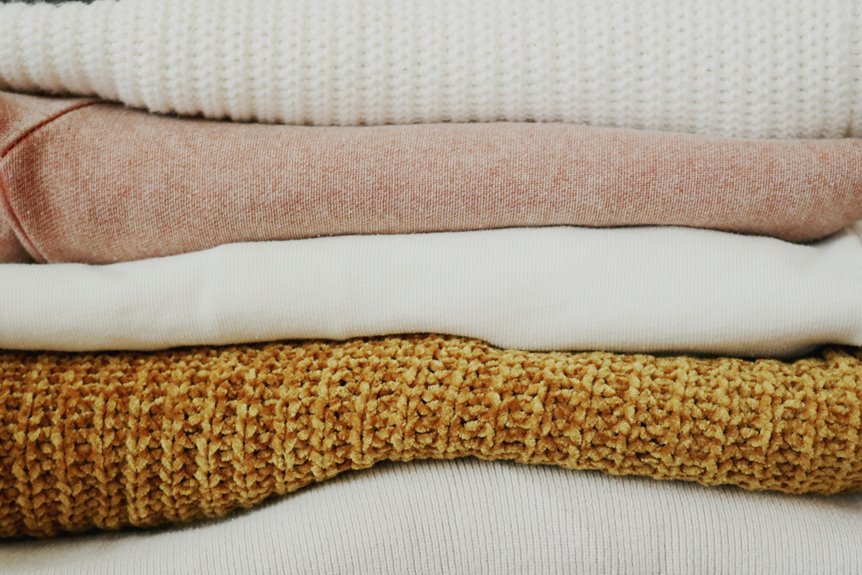
You’ll love combed cotton sateen for its silky softness and subtle sheen, thanks to longer cotton fibers and a smooth satin weave. This fabric feels luxuriously smooth because it removes shorter, rough strands, making it stronger and less prone to pilling. To keep it soft, wash gently with cool water and avoid high heat drying. Want to know how to spot quality and care for it best? There’s more to uncover behind its luxurious feel.
Key Takeaways
- Combed cotton sateen is made by removing short fibers, enhancing softness and durability with a smooth, lustrous satin weave finish.
- The combing process aligns fibers uniformly, reducing pilling and creating a silkier, more comfortable fabric that improves with washing.
- Use gentle, dye-free detergents and wash in cool water to maintain the fabric’s softness and sheen over time.
- Air-dry or tumble dry on low heat to protect the sateen’s texture and prevent shrinkage or stiffness.
- Look for a thread count of 300–600 and certifications like OEKO-TEX to ensure high-quality, soft combed cotton sateen products.
What Is Combed Cotton Sateen?
Combed cotton sateen is a type of fabric known for its smooth texture and subtle sheen. When you choose this fabric, you’re getting cotton fibers that have been carefully combed to remove impurities and shorter strands.
This process leaves behind longer, stronger fibers that make the fabric more durable and less prone to pilling. The sateen weave gives the fabric its characteristic luster and softness by weaving the threads in a way that exposes more of the cotton’s surface.
You’ll notice that combed cotton sateen feels silkier and drapes beautifully compared to regular cotton. It’s often used in bedding and apparel where comfort and appearance matter.
How Combed Cotton Enhances Fabric Softness
Because shorter fibers and impurities are removed during processing, you’ll find the fabric feels noticeably softer against your skin. Combed cotton’s refinement eliminates rough fibers that cause irritation, giving you a smoother, more comfortable touch.
This process also strengthens the yarn by aligning fibers uniformly, so the fabric drapes better and feels consistently gentle. When you wear or use combed cotton sateen, you’ll notice less pilling and a silkier surface, enhancing the overall softness.
The absence of fuzzy, uneven threads means the fabric won’t scratch or cling uncomfortably. In short, combed cotton transforms ordinary cotton into a luxurious, soft material that feels indulgent every time you come into contact with it, making your sheets, clothing, or upholstery feel truly premium.
The Weaving Process Behind Sateen Fabric
You’ll notice that sateen fabric gets its smooth feel from a satin weave structure, where threads float over several others to create a lustrous surface.
The thread count plays a key role, too—higher counts mean a denser weave and a softer, more durable fabric.
Understanding these factors helps you appreciate why sateen stands out in comfort and quality.
Satin Weave Structure
The satin weave structure forms the foundation of sateen fabric, giving it that smooth and lustrous surface you recognize.
This weaving technique involves floating yarns over others in a specific pattern, which creates fewer interlacings and a silkier feel. When you understand this structure, you appreciate why sateen feels so soft and drapes beautifully.
Key features of satin weave include:
- Long floats of yarn on the fabric surface
- Minimal yarn intersections for a smooth texture
- A glossy finish that reflects light elegantly
- Enhanced softness compared to plain weaves
- Durable yet breathable fabric construction
Thread Count Impact
Thread count plays an essential role in determining the feel and durability of sateen fabric.
When you choose sateen with a higher thread count, you’re getting more threads woven tightly per square inch, which enhances softness and strength. This dense weave creates that signature smooth, lustrous surface you love, making the fabric feel silky against your skin.
However, going too high on thread count doesn’t always mean better quality—it can sometimes reduce breathability. So, you should aim for a balanced thread count, typically between 300 and 600, to enjoy both comfort and durability.
Understanding this aspect helps you pick sateen that lasts longer while maintaining its luxurious softness, ensuring your bedding feels cozy night after night.
Benefits of Choosing Combed Cotton Sateen
Although it might seem like a small detail, choosing combed cotton sateen can greatly enhance your fabric experience. This fabric offers more than just a soft touch—it combines durability and luxury effortlessly.
When you pick combed cotton sateen, you’re investing in quality that feels good and lasts long. Here’s why it stands out:
- Smoother texture thanks to the combing process removing short fibers
- Enhanced softness that improves with each wash
- Lustrous sheen giving fabrics an elegant look
- Stronger fibers resist pilling and wear
- Breathable and comfortable for all-day use
Comparing Combed Cotton Sateen to Other Fabrics
When you compare combed cotton sateen to other fabrics, you’ll notice it strikes a unique balance between softness, durability, and sheen.
Unlike regular cotton, combed cotton sateen feels smoother because impurities and short fibers are removed during the combing process.
Combed cotton sateen feels smoother than regular cotton thanks to removed impurities and short fibers.
Compared to linen, it’s softer and less prone to wrinkling, while offering a subtle luster that linen lacks.
If you’re considering silk, combed cotton sateen provides a similar smoothness but is more affordable and easier to care for.
Compared to standard sateen made from non-combed cotton, combed cotton sateen has enhanced strength and softness.
Ideal Uses for Combed Cotton Sateen
Combed cotton sateen shines in applications where you want both comfort and elegance.
Its smooth texture and subtle sheen make it ideal for pieces that feel luxurious against your skin while maintaining durability.
You’ll find it perfect for situations where softness matters without sacrificing style.
Consider these ideal uses:
- Bed linens that offer a silky touch and breathable comfort
- Dress shirts that need a polished look with a soft feel
- Lightweight jackets or blouses for a refined appearance
- Drapes that add a subtle luster to your room’s decor
- Pillowcases that enhance sleep quality with smoothness
Tips for Maintaining Softness in Combed Cotton Sateen
To keep your cotton sateen soft and smooth, you’ll want to handle it with care during washing and drying. Avoid harsh chemicals and high heat, which can damage fibers and reduce softness. Instead, opt for gentle detergents and lower temperatures. When storing, fold sateen items neatly to prevent wrinkles and creases that can stiffen the fabric. Regularly air out your items to maintain freshness without over-washing.
| Tip | Why It Helps |
|---|---|
| Use gentle detergent | Protects fibers from damage |
| Wash in cool water | Prevents shrinkage and stiffness |
| Avoid high heat drying | Maintains softness and sheen |
| Store folded, not hung | Prevents stretching and wrinkles |
How to Wash and Care for Combed Cotton Sateen
To keep your combed cotton sateen looking its best, you’ll want to wash it in cool or warm water and pick a gentle detergent that won’t strip the fabric.
Avoid harsh chemicals and high heat when drying to preserve its softness and sheen.
Proper storage, like folding it neatly in a cool, dry place, will also help maintain its quality over time.
Washing Temperature Tips
Although it might be tempting to wash cotton sateen in hot water to remove stains, you should stick to cooler temperatures to preserve its smooth texture and vibrant color.
Hot water can weaken the fibers and cause fading, so aim for gentle care. Here are some washing temperature tips to follow:
- Use cold or lukewarm water (around 30°C or 86°F) for regular washes.
- Avoid hot water cycles, especially above 40°C (104°F).
- Pre-treat stains with a mild spot cleaner before washing.
- For heavily soiled items, use warm water sparingly, not exceeding 40°C.
- Always check the care label for manufacturer recommendations.
Choosing Gentle Detergents
How do you guarantee your combed cotton sateen stays soft and vibrant after every wash?
Start by choosing gentle detergents specifically designed for delicate fabrics. Avoid harsh chemicals, bleach, and strong enzymes that can break down fibers and dull the sateen’s smooth finish.
Look for detergents labeled “mild,” “for delicates,” or “free of dyes and fragrances,” as these reduce the risk of irritation and preserve fabric integrity. Use only the recommended amount; too much detergent can leave residue, making the fabric stiff.
If you prefer natural options, consider those with plant-based ingredients and no optical brighteners.
Drying and Storage Methods
After selecting the right detergent, you’ll want to focus on drying and storing your combed cotton sateen properly to maintain its softness and sheen.
Avoid high heat to prevent damage and preserve the fabric’s natural luster. Instead, air-dry or use a low-heat setting in your dryer.
When storing, keep your sateen in a cool, dry place away from direct sunlight to prevent fading.
Here are some quick tips to follow:
- Tumble dry on low or air-dry flat to avoid shrinkage
- Remove promptly from the dryer to minimize wrinkles
- Store folded rather than hanging to prevent stretching
- Use breathable cotton storage bags instead of plastic
- Keep away from moisture to avoid mildew and odors
These steps help your combed cotton sateen last longer and stay luxuriously soft.
Signs of Quality in Combed Cotton Sateen Products
When you examine combed cotton sateen products closely, you’ll notice specific details that reveal their quality.
First, check the fabric’s smoothness; high-quality sateen feels silky with a subtle sheen, not dull or rough.
High-quality sateen feels silky smooth with a subtle sheen, never dull or rough to the touch.
Inspect the thread count—typically between 300 and 600—higher counts often mean denser, softer fabric.
Look at the stitching; tight, even seams indicate careful craftsmanship.
The fabric should drape well without stiffness, showing its combed, long-staple cotton fibers.
Also, quality sateen resists pilling and maintains softness after washing.
Finally, the product label can offer clues—certifications like OEKO-TEX or organic cotton suggest better material standards.
Frequently Asked Questions
Can Combed Cotton Sateen Be Used for Outdoor Clothing?
You can use combed cotton sateen for outdoor clothing, but it’s not ideal for heavy-duty activities. It’s soft and comfortable but lacks water resistance and durability compared to specialized outdoor fabrics designed for harsh conditions.
Is Combed Cotton Sateen Hypoallergenic?
Imagine Sarah, who has sensitive skin, finds combed cotton sateen gentle and hypoallergenic. You’ll appreciate its natural fibers, which resist allergens better than synthetic fabrics, making it ideal if you want to avoid irritation or allergic reactions.
What Colors Are Most Durable in Combed Cotton Sateen?
You’ll find darker colors like navy, charcoal, and deep burgundy tend to be more durable in combed cotton sateen. They resist fading better than lighter shades, so your fabric stays vibrant through multiple washes.
Does Combed Cotton Sateen Wrinkle Easily?
Like a calm sea after a storm, combed cotton sateen resists wrinkles better than ordinary cotton. You’ll find it smooth and elegant, though light creases can form if you don’t handle it with care after washing.
Are There Eco-Friendly Options for Combed Cotton Sateen?
You can find eco-friendly combed cotton sateen options made from organic cotton grown without harmful pesticides. Look for certifications like GOTS or OEKO-TEX to guarantee sustainable and chemical-free production, helping you choose greener, softer fabrics.