
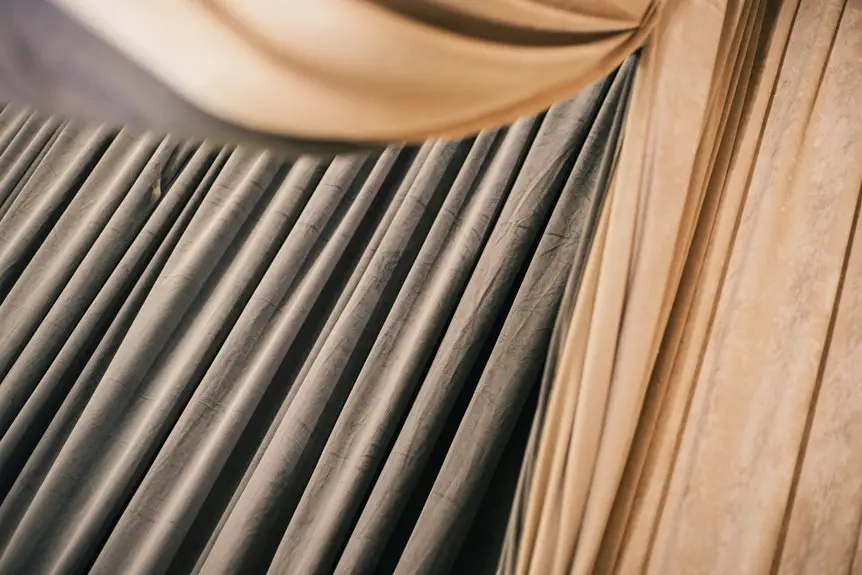
When exploring Katan fabric, you should know key terms like thread count, which reflects fabric density, and twist, indicating silk thread tightness for strength. Luster describes Katan’s natural, subtle sheen, while handfeel refers to its soft yet firm texture. Understanding weave types—plain, twill, satin—helps you spot quality and design. Knowing these terms lets you appreciate Katan’s durability, elegance, and cultural value, with more fascinating details about its heritage and care coming up.
Key Takeaways
- Thread Count denotes the number of threads per square inch, with higher counts indicating finer and denser Katan fabric.
- Twist refers to the tightness of silk thread twisting, affecting the fabric’s strength and smoothness.
- Luster describes the natural shine of the silk, with authentic Katan featuring a subtle, elegant sheen.
- Handfeel is the texture and softness experienced when touching Katan, representing quality with a soft yet firm sensation.
- Weave Types like plain, twill, and satin influence Katan’s texture and visual appeal, essential for identifying fabric quality.
Origin and Characteristics of Katan Fabric
Although you mightn’t have heard of Katan fabric before, it has a rich history rooted in Indian weaving traditions.
Discover the rich history of Katan fabric, deeply woven into Indian textile traditions.
You’ll find that Katan is a type of silk known for its strength and lustrous texture. It’s made from pure silk threads, tightly twisted to create a durable yet smooth fabric.
When you touch Katan, you’ll notice its fine weave and slight sheen, which make it ideal for luxurious garments.
Originating from northern India, this fabric has been prized for centuries, often used in royal attire due to its elegance and resilience.
If you’re exploring traditional Indian textiles, understanding Katan’s origin and characteristics helps you appreciate how artisans skillfully combine beauty with strength in this unique silk fabric.
Key Weaving Techniques in Katan Fabric
You’ll want to understand the basic weaving techniques behind katan fabric to appreciate its texture and strength.
Plain weave, twill weave, and satin weave each create distinct patterns and finishes that define the fabric’s look and feel.
Let’s explore how these weaving methods shape katan’s unique qualities.
Plain Weave Basics
Plain weave forms the foundation of Katan fabric’s strength and texture. When you work with this weave, you’ll notice the simple over-under pattern where each weft thread crosses one warp thread at a time.
This straightforward interlacing creates a balanced, durable fabric that resists wear and tear. You’ll appreciate how the plain weave produces a smooth surface, making Katan fabric ideal for both everyday wear and special occasions.
Because the structure is tight and uniform, it offers a crisp hand feel and subtle sheen without being too heavy. When you handle Katan fabric, understanding the plain weave helps you recognize its resilience and elegance, setting the stage for more complex weaving techniques that build on this solid base.
Twill Weave Patterns
When you explore twill weave patterns in Katan fabric, you’ll discover a distinctive diagonal texture that adds depth and visual interest.
This weaving technique creates a sturdy yet elegant fabric, perfect for luxurious garments. Twill patterns are defined by the way threads cross over one another, forming angled lines that enhance Katan’s natural sheen.
Here are four key twill weave types you should know:
- Right-hand twill – Diagonal lines run from upper right to lower left.
- Left-hand twill – Diagonal lines run from upper left to lower right.
- Herringbone twill – Zigzag pattern created by alternating right and left twills.
- Diamond twill – Interlocking diamond shapes formed by complex twill variations.
Understanding these will help you appreciate Katan’s rich texture and weave artistry.
Satin Weave Characteristics
While twill weaves give Katan fabric its textured elegance, satin weaves bring a smooth, lustrous finish that many find irresistible.
When you encounter satin weave in Katan, you’ll notice its characteristic glossy surface created by floating warp or weft threads over multiple yarns before interlacing. This technique minimizes visible interlacings, allowing light to reflect beautifully, enhancing the fabric’s sheen.
Satin weaves also produce a softer hand feel compared to twill, making the fabric drape gracefully. However, because of these long floats, satin weaves can be more prone to snagging, so you’ll want to handle your Katan fabric with care.
Understanding satin weave helps you appreciate the luxurious texture and shine that define this classic Katan style.
Common Patterns Found in Katan Textile
You’ll notice Katan textiles often showcase traditional motifs that carry cultural significance.
Geometric designs add structure and rhythm to the fabric, while floral patterns bring a touch of natural elegance.
Understanding these common patterns helps you appreciate the artistry behind each piece.
Traditional Motifs Overview
Although Katan fabric is renowned for its fine texture, its traditional motifs truly capture the cultural essence woven into every thread.
When you explore these patterns, you’ll see how history and artistry come alive in each design. These motifs often symbolize nature, spirituality, and local heritage.
Here are four common traditional motifs you should know:
- Paisley (Mango) – Symbolizes fertility and life, a timeless curved teardrop shape.
- Floral Patterns – Represent growth and beauty, often intricately detailed.
- Animal Motifs – Depict creatures like peacocks or elephants, embodying strength and grace.
- Religious Symbols – Incorporate spiritual icons reflecting cultural beliefs.
Understanding these motifs helps you appreciate Katan fabric beyond its texture, revealing stories woven through generations.
Geometric Designs Explained
Traditional motifs bring life and meaning to Katan fabric, but geometric designs add a structured rhythm that balances artistry with symmetry.
When you explore Katan textiles, you’ll notice patterns like chevrons, diamonds, and zigzags forming repetitive sequences. These shapes create a visual harmony that appeals to the eye and highlights the fabric’s fine weave.
You’ll find that geometric designs often emphasize clean lines and precise angles, making them ideal for both traditional and modern garments. By incorporating these patterns, artisans showcase their skill in maintaining consistency across the fabric’s surface.
When selecting Katan fabric, recognizing these geometric elements helps you appreciate the craftsmanship and choose a design that fits your style perfectly.
Floral Patterns Characteristics
Floral patterns breathe elegance and importance into Katan fabric, offering a softer contrast to geometric designs.
When you explore Katan textiles, you’ll notice these patterns aren’t just decorative—they carry cultural significance and showcase skilled craftsmanship.
Here’s what you should know about common floral patterns in Katan:
- Mogra (Jasmine) – Delicate and fragrant, symbolizing purity and grace.
- Lotus – Represents spiritual awakening and beauty, often stylized in bold shapes.
- Vine Motifs – Flowing and continuous, these evoke growth and connection.
- Champa – A fragrant flower pattern, reflecting elegance and tradition.
You’ll find these designs intricately woven or embroidered, enhancing the fabric’s texture and appeal, perfect for festive and formal wear.
Types of Silk Used in Katan Weaving
Silk lies at the heart of Katan weaving, and understanding its types can deepen your appreciation of this exquisite fabric.
Primarily, Katan employs mulberry silk, prized for its long, smooth fibers that give the fabric its signature strength and sheen. You’ll also encounter tussar silk, which offers a slightly coarser texture and natural gold hue, adding depth to Katan textiles.
While mulberry silk provides the sleek finish, tussar silk introduces subtle variations that enhance the fabric’s visual appeal.
When you explore Katan fabric, recognizing these silk types helps you distinguish quality and craftsmanship. Each silk type influences the drape, texture, and luster, so knowing them enriches your understanding of the art behind Katan weaving.
Terminology Related to Katan Fabric Quality
Understanding the terminology related to Katan fabric quality helps you appreciate its craftsmanship and value.
Grasping Katan fabric terms enhances your appreciation of its intricate craftsmanship and inherent value.
When choosing Katan fabric, you’ll encounter specific terms that indicate its excellence and durability. Knowing these terms lets you make informed decisions and recognize authentic pieces.
- Thread Count – Refers to the number of threads per square inch; higher counts mean finer, denser fabric.
- Twist – Indicates how tightly the silk threads are twisted; a tighter twist results in stronger, smoother fabric.
- Luster – Describes the natural shine of the silk; quality Katan fabric has a subtle, elegant sheen.
- Handfeel – The texture and softness experienced when you touch the fabric; a soft yet firm handfeel signals superior quality.
Mastering these terms guarantees you pick the best Katan fabric for your needs.
Traditional Uses and Cultural Significance
Because Katan fabric has been prized for centuries, it holds a special place in many cultural traditions. When you wear or work with Katan, you’re connecting to a rich heritage—often seen in traditional Indian weddings and ceremonies where its smooth, lustrous texture symbolizes purity and elegance.
You’ll find Katan used in bridal saris, ceremonial robes, and festive attire, emphasizing its importance in rituals and celebrations. Its durability and sheen have made it a fabric of choice for heirloom garments passed through generations.
Care and Maintenance of Katan Fabric
While Katan fabric impresses with its delicate sheen and strength, it requires careful handling to maintain its beauty over time.
Katan fabric’s delicate sheen and strength demand gentle care to preserve its lasting beauty.
To keep your Katan garments looking pristine, follow these key care tips:
- Hand wash gently: Use cold water and mild detergent to avoid damaging the fibers.
- Avoid wringing: Instead, press out excess water with a towel to prevent creases and distortion.
- Air dry flat: Keep it out of direct sunlight to preserve color and texture.
- Store properly: Fold your Katan fabric carefully and store it in a cool, dry place to prevent moth damage and wrinkles.
Frequently Asked Questions
Where Can I Buy Authentic Katan Fabric Online?
You can buy authentic katan fabric online from specialized Indian textile stores like Fabindia, Amazon India, or Etsy. Always check reviews and product descriptions to guarantee genuine quality before you make your purchase.
How Much Does Katan Fabric Typically Cost per Yard?
Katan’s enchanting charm costs can vary, but you’ll typically pay between $20 to $50 per yard. Prices depend on quality, weave, and seller. Shop smart and snag splendid silk for your stylish sewing!
Can Katan Fabric Be Used for Modern Fashion Designs?
You can definitely use katan fabric for modern fashion designs. Its smooth texture and rich sheen add elegance to contemporary styles, making your creations stand out with a blend of traditional luxury and modern appeal.
Are There Eco-Friendly Alternatives to Traditional Katan Silk?
They say, “Necessity is the mother of invention.” You can choose eco-friendly alternatives like organic silk, Tencel, or bamboo fabric. These options reduce environmental impact while keeping your designs elegant and sustainable.
What Are the Best Seasons to Wear Katan Garments?
You’ll find katan garments best for cooler seasons like fall and winter since the fabric is thick and warm. It’s perfect when you want elegance without feeling too hot or uncomfortable during chilly weather.