
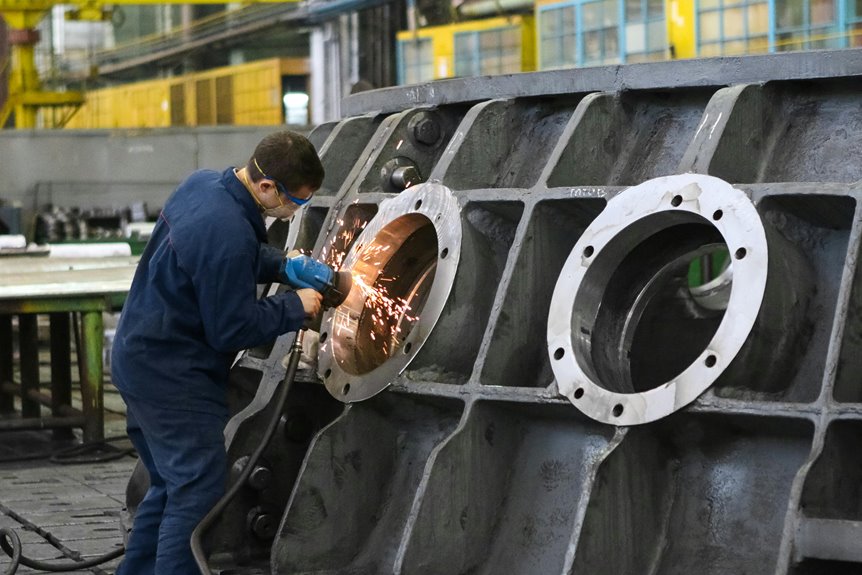
You start by gathering sturdy materials like stainless steel and a motor with adjustable speeds to build your coconut milking machine. Attach the motor securely to the frame, align rotating drums, and fix a coconut holder for firm grip. Install milking nozzles and connect tubes to collect milk safely. Test pressure settings and adjust for efficient extraction, then maintain by cleaning and lubricating regularly. Keep following the process to reveal detailed steps and tips for flawless operation.
Key Takeaways
- Use a sturdy stainless steel or aluminum frame to ensure durability and machine stability during coconut milk extraction.
- Attach a motor with adjustable speed to a rotating drum that presses grated coconut flesh for efficient milk extraction.
- Install a coconut holder on the drum and position a milking nozzle above it for optimal milk flow collection.
- Connect food-grade tubing from the nozzle to sealed collection containers to maintain hygiene and prevent leaks.
- Test and calibrate pressure, cutting, and squeezing mechanisms to maximize extraction efficiency and machine performance.
Understanding the Basics of Coconut Milk Extraction
Coconut milk extraction begins with separating the rich, creamy liquid from the grated coconut meat. You’ll first need to grate fresh coconut meat finely to maximize the surface area for milk release.
Then, you press or squeeze the grated meat to extract the coconut milk, which contains fat, water, and nutrients. Traditionally, this happens manually, but machines speed up and simplify the process.
Pressing grated coconut extracts nutritious milk; machines now make this quicker and easier than manual methods.
You’ll notice two types of milk: thick milk from the first pressing and thinner milk from subsequent ones. Keeping the grated coconut fresh is essential since it affects yield and quality.
Understanding this basic process helps you appreciate how coconut milking machines automate and optimize extraction, ensuring you get the most milk efficiently.
Key Components and Materials Required
Building an efficient milking machine starts with knowing the essential components and materials you’ll need. First, you’ll require a sturdy frame, typically made from stainless steel or aluminum, for durability and corrosion resistance.
Next, a motor with adjustable speed settings powers the extraction process. You’ll also need a set of rotating drums or rollers designed to press the coconut flesh gently.
Food-grade tubing and collection containers guarantee the extracted milk stays clean and safe. Additionally, seals and gaskets prevent leaks, while a control panel helps you manage operations smoothly.
Don’t forget electrical wiring and safety switches to protect both the machine and the user. Choosing high-quality materials will boost your machine’s longevity and efficiency, making the extraction process more reliable and hygienic.
Step-by-Step Fabrication Process
With the key components and materials in place, you can begin assembling your milking machine step by step.
First, attach the motor securely to the base frame, guaranteeing it’s stable. Next, connect the rotating drum to the motor shaft, aligning it properly for smooth operation.
Secure the motor to the base, then align and attach the rotating drum to the motor shaft.
Then, fix the coconut holder onto the drum, making sure it grips the coconut firmly without damaging it. Install the milking nozzle above the holder, positioning it to extract milk efficiently.
Afterward, connect the tubing from the nozzle to the collection container, sealing all joints tightly to prevent leaks.
Finally, check all bolts and screws to confirm everything’s tightened correctly. This methodical assembly guarantees your machine operates safely and efficiently once powered on.
Testing and Calibration for Optimal Performance
Before you start milking, you’ll need to test and calibrate your machine to assure it runs smoothly and extracts milk efficiently.
Begin by running the machine empty to check for any mechanical issues or unusual noises. Next, adjust the pressure settings to match the firmness of the coconut meat; too much pressure can damage the machine, while too little reduces yield.
Use a few sample coconuts to test extraction rates, observing how well the milk flows and the residue left behind. Fine-tune the cutting blades and squeezing mechanisms to optimize performance.
Keep a notebook handy to record each adjustment and its effect. This methodical approach assures your machine operates at peak efficiency, giving you consistent, high-quality coconut milk with minimal waste.
Maintenance Tips for Longevity and Efficiency
After fine-tuning your coconut milking machine, keeping it in top condition guarantees it continues to perform well over time.
Regular maintenance prevents breakdowns and preserves efficiency. Here’s how you can maintain your machine for longevity:
- Clean Thoroughly After Each Use: Remove coconut residue and moisture from all parts to prevent corrosion and bacterial growth.
- Lubricate Moving Parts: Apply food-grade lubricant to gears and bearings weekly to minimize friction and wear.
- Inspect for Wear and Damage: Check belts, seals, and cutters regularly, replacing any worn components to avoid unexpected failures.
Frequently Asked Questions
Can This Machine Be Used for Other Types of Nut Milk Extraction?
You can use the machine for other nut milk extractions, but you’ll need to adjust settings or attachments to handle different nut textures and sizes effectively. It’s versatile, but customization guarantees the best results.
What Is the Estimated Cost of Building the Machine?
You’re about to spend less than your weekly coffee habit—around $150 to $300—to build this marvel. Don’t worry, it won’t cost a fortune, just enough to keep you milking nuts like a pro.
Are There Any Safety Precautions During Operation?
You should always wear protective gloves and goggles while operating the machine. Keep hands clear of moving parts, guarantee the workspace is clean, and follow the manufacturer’s instructions to prevent accidents and guarantee safe operation.
How Long Does the Fabrication Process Typically Take?
Imagine the hum of tools and the steady rhythm of assembly; you’ll find the fabrication process typically takes a few days to a week, depending on complexity and materials, ensuring every part fits perfectly before operation.
Is This Machine Suitable for Commercial-Scale Production?
You can definitely use this machine for commercial-scale production since it’s designed for efficiency and durability. It handles high volumes well, so you won’t have to worry about frequent breakdowns or slow processing times.