
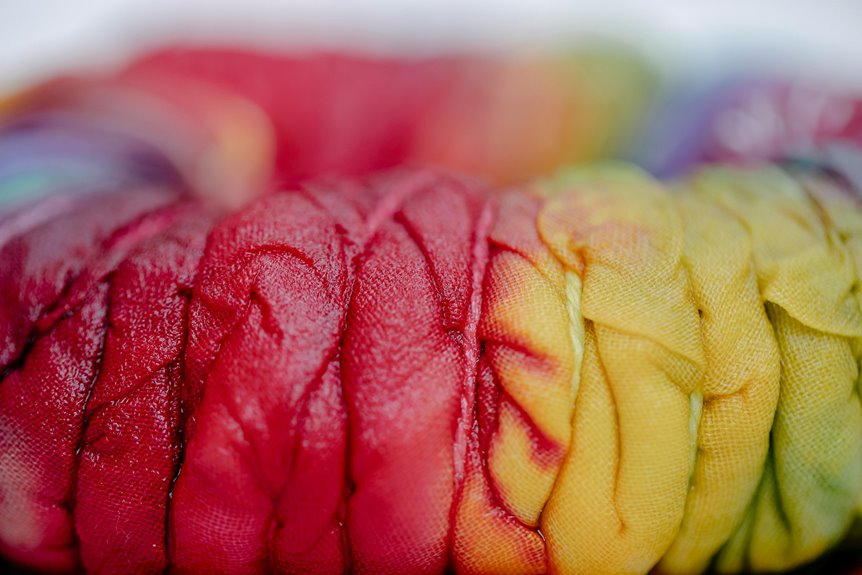
You can master dip dyeing by understanding its rich history, the science behind gradient effects, and proper fabric preparation. Start with natural fibers and suitable dyes, then immerse your fabric gradually to control color saturation and create smooth ombré shifts. Techniques like layering dips and blending wet dyes help craft flawless gradients. Caring for your dyed creations preserves their vibrancy. Keep exploring, and you’ll reveal advanced methods and creative project ideas to elevate your dyeing skills.
Key Takeaways
- Dip dyeing involves immersing fabric gradually to create smooth, vibrant color gradients through controlled dye absorption and diffusion processes.
- Natural fibers like cotton and silk absorb dye best, requiring pre-washing and soda ash soaking for optimal color bonding.
- Maintaining consistent dye bath temperature and gradual fabric dipping ensures seamless color transitions and prevents harsh lines.
- Layering multiple dips with varying dye concentrations and blending while wet enhances complex, multi-tonal gradient effects.
- Proper post-dye care, including cold water washes and avoiding bleach, preserves color vibrancy and fabric quality over time.
The Origins and Evolution of Dip Dyeing
Although dip dyeing has gained modern popularity for its vibrant and artistic results, it actually dates back centuries. You’ll find early examples in ancient civilizations where artisans dipped fabrics into natural dyes to create simple yet striking effects.
Over time, techniques evolved as different cultures experimented with colors and materials, shaping dip dyeing into a diverse craft. When you dip fabric today, you’re connecting with a tradition that’s spanned continents and eras.
Dip dyeing bridges cultures and centuries, evolving as artisans explore color and material in a timeless craft.
The process’s simplicity made it accessible, while its potential for creativity kept it alive through generations. As you explore dip dyeing, remember it’s more than just a trend—it’s a practice steeped in history, adapting continuously while honoring its roots.
You’re part of a legacy that celebrates color and craftsmanship.
Understanding the Science Behind Gradient Effects
You’ll notice that the gradient effect happens because fabric absorbs dye differently at various points.
The concentration of dye changes as you move along the fabric, creating a smooth shift of color.
Understanding how the fabric interacts with the dye helps you control the final look.
Color Absorption Mechanics
When you dip fabric into dye, the fibers absorb color based on their material composition and the dye’s chemical properties. Natural fibers like cotton and silk soak up dye differently than synthetic fibers such as polyester because their molecular structures vary.
The dye molecules penetrate the fabric, bonding chemically or physically depending on the fiber type. Temperature, time, and agitation also influence how deeply the color sets. You’ll notice that the fabric’s surface near the dip point absorbs more dye, creating the characteristic gradient effect as color intensity fades with distance.
Understanding these mechanics helps you control the depth and smoothness of your gradient, ensuring the change looks seamless and natural without unexpected blotches or streaks. Mastering absorption is key to perfecting dip-dye artistry.
Dye Concentration Gradients
Dye concentration gradients play an essential role in creating smooth shifts of color during dip dyeing. When you gradually immerse fabric into dye, the portion submerged longest absorbs more dye, resulting in deeper saturation.
The dye’s concentration decreases as you move up the fabric, forming a natural gradient. Controlling this gradient means managing immersion time and dye strength carefully. You can adjust the solution’s concentration or repeatedly dip the fabric to build intensity in specific areas.
The molecular movement of dye particles follows a diffusion process, leading to even color dispersion over time. By understanding how dye concentration diminishes along the fabric, you gain control over the gradient’s softness or sharpness, allowing you to craft precise and stunning color changes.
Fabric Interaction Dynamics
Although the concentration of dye sets the foundation for gradients, how fabric fibers interact with the dye determines the final effect you see. Different fibers absorb and hold dye differently; natural fibers like cotton and wool soak up dye more readily, creating richer, more vibrant gradients.
Synthetic fibers, however, might repel or unevenly absorb dye, leading to subtler or patchier shifts. The fiber’s texture and weave also influence how the dye spreads—tighter weaves can slow absorption, creating sharper gradient lines, while looser weaves allow more blending.
Temperature, fiber pre-treatment, and dye type further affect absorption rates. By understanding these dynamics, you can better control your dip dyeing results, predicting how your chosen fabric will respond and achieving the smooth, eye-catching gradients you want.
Essential Tools and Materials for Dip Dyeing
To get started with dip dyeing, you’ll need to choose the right fabric that absorbs dye well, like cotton or silk.
Picking the proper dye type is essential, whether you go with fiber-reactive, acid, or all-purpose dyes.
Don’t forget safety gear like gloves and masks to protect yourself during the process.
Fabric Selection Tips
When choosing fabric for dip dyeing, you’ll want to focus on natural fibers like cotton, linen, or silk because they absorb dye more effectively and produce vibrant, lasting colors.
Synthetic fabrics often resist dye, resulting in uneven or faded hues. Also, consider the fabric’s weight and weave; lighter, loosely woven materials tend to show color gradients beautifully.
Before dyeing, make certain the fabric is clean and free of finishes that might block dye absorption.
Here are some tips to get you started:
- Opt for 100% natural fibers to guarantee better dye uptake
- Pre-wash fabrics to remove sizing or treatments
- Test a small swatch to preview color and absorption
These steps help you achieve stunning dip-dye effects every time.
Dye Types Overview
Dye types play an essential role in achieving the vibrant and lasting colors you want in dip dyeing projects. You’ll mainly encounter fiber-reactive dyes, acid dyes, and all-purpose dyes.
Fiber-reactive dyes work best on natural fibers like cotton and linen, offering bright, long-lasting hues. Acid dyes suit protein fibers such as silk and wool, delivering rich, deep colors.
All-purpose dyes provide versatility but often sacrifice intensity and durability. Choose your dye based on the fabric you’re working with and the effect you want to realize.
Additionally, consider whether you need liquid or powder dye forms; liquid dyes dissolve quickly, while powders often provide more concentrated color. Knowing your dye type guarantees your dip dye project turns out exactly as you envision.
Necessary Safety Gear
Although dip dyeing is a creative and rewarding process, you’ll need the right safety gear to protect yourself from chemicals and stains.
Handling dyes and fixatives involves exposure to potentially harmful substances, so safeguarding your skin, eyes, and clothes is vital. Wearing appropriate gear keeps your workspace clean and prevents accidental irritation or injury.
Make sure you have these essentials on hand:
- Gloves: Protect your hands from harsh dyes and chemicals.
- Apron or old clothing: Shield your clothes from permanent stains.
- Safety goggles: Prevent splashes from reaching your eyes.
Preparing Fabrics for Successful Dyeing
Before you begin dip dyeing or creating gradients, you need to prepare your fabric properly to guarantee the colors adhere evenly and last longer.
Start by washing the fabric without fabric softener to remove any chemicals or oils that might block dye absorption.
Next, if your fabric is cotton, linen, or another natural fiber, soak it in a water and soda ash solution for about 20 minutes—this helps the dye bond better.
Avoid skipping this step; it’s essential for vibrant, lasting colors.
After soaking, gently wring out excess liquid but keep the fabric damp for dyeing.
Also, make sure your workspace is clean and free of residues that could contaminate your fabric.
Proper preparation sets the foundation for stunning dip dye and gradient effects.
Step-by-Step Guide to Creating Perfect Dip Dye Patterns
To create a perfect dip dye pattern, start by selecting the right dye and preparing your dye bath according to the fabric’s needs.
Next, submerge your fabric gradually, controlling the immersion time to achieve the desired color intensity. Remember, the longer the fabric stays submerged, the deeper the color.
Here’s a quick checklist to keep you on track:
- Use gloves and protect your workspace to avoid stains.
- Dip fabric slowly and steadily for even color distribution.
- Allow the fabric to dry vertically to prevent blotches.
Once you’ve dipped and dried your fabric, you can repeat the process with different sections to create multi-tonal effects.
This step-by-step approach guarantees vibrant, clear dip dye patterns every time, setting the stage for more advanced gradient techniques.
Techniques for Achieving Smooth Color Transitions
Creating smooth color shifts in dip dyeing requires careful control of dye application and blending techniques. To achieve this, start by gradually lowering your fabric into the dye bath, allowing the color to saturate unevenly for a natural gradient.
Use a sponge or brush to gently blend the blending area while the dye is still wet. You can also manipulate the fabric’s angle or move it slowly in and out to control how the pigment settles.
Another effective approach is layering multiple dips with lighter dye concentrations, building the gradient step by step. Remember to keep the dye baths well-mixed and temperatures consistent to avoid harsh lines.
These methods help you create seamless, professional-looking color transitions every time.
Tips for Caring for Your Dip Dyed Creations
Although dip dyeing produces vibrant and unique results, caring for your creations properly guarantees their colors stay bright and lasting. You want to handle your dyed pieces gently to preserve the integrity of the color and fabric.
Proper care ensures your dip dyed pieces remain vibrant and the fabric stays intact over time.
Start by washing them separately in cold water to prevent bleeding and fading. Avoid harsh detergents; instead, choose mild, color-safe options. When drying, air drying is best—skip the dryer to prevent shrinkage and dullness.
Also, store your dip dyed items away from direct sunlight to avoid color fading over time.
- Wash inside out in cold water with gentle detergent
- Air dry flat or hang away from direct sunlight
- Avoid bleach and fabric softeners to protect colors
Following these tips helps your dip dyed creations stay vibrant longer.
Creative Project Ideas Using Gradient Dyeing Methods
Many artists find gradient dyeing offers endless possibilities for adding depth and dimension to their projects. You can transform simple fabrics into stunning scarves, tote bags, or pillow covers that catch the eye.
Try creating ombré effects on T-shirts or even denim for a trendy, personalized look. Experiment with layering colors on cotton or silk to achieve soft shifts or bold contrasts.
Beyond textiles, consider using gradient dyeing on paper for unique art prints or journal covers. You might also explore home décor projects, like gradient-dyed curtains or table runners, to add subtle color variations.
Frequently Asked Questions
Can Dip Dyeing Be Done on Natural and Synthetic Fibers Equally?
You can dip dye both natural and synthetic fibers, but results vary. Natural fibers absorb dye better, giving vibrant colors, while synthetic fibers need special dyes or treatments. You’ll get different effects depending on the material.
How Long Does the Dip Dye Color Typically Last Without Fading?
You’ll find that dip dye colors can last up to 30 washes before fading noticeably. To keep your colors vibrant, avoid harsh detergents and direct sunlight, which speed up fading and dull your fabric’s look.
Are There Any Safety Precautions to Consider When Using Fabric Dyes?
You should always wear gloves and work in a well-ventilated area to avoid skin irritation and inhaling fumes. Also, protect your surfaces from stains and follow the dye’s instructions carefully to stay safe.
Can Dip Dyeing Techniques Be Applied to Other Materials Besides Fabric?
You can definitely apply dip dyeing to materials beyond fabric, like paper, wood, and even ceramics. Just make sure you choose dyes suitable for each surface to get vibrant, lasting colors without damage or fading.
What Are Common Mistakes to Avoid During the Dip Dyeing Process?
You shouldn’t rush the dyeing or leave the fabric unevenly submerged. Avoid using the wrong dye for your material, skipping pre-wash, or neglecting to wear gloves. These mistakes can ruin your project’s outcome.