
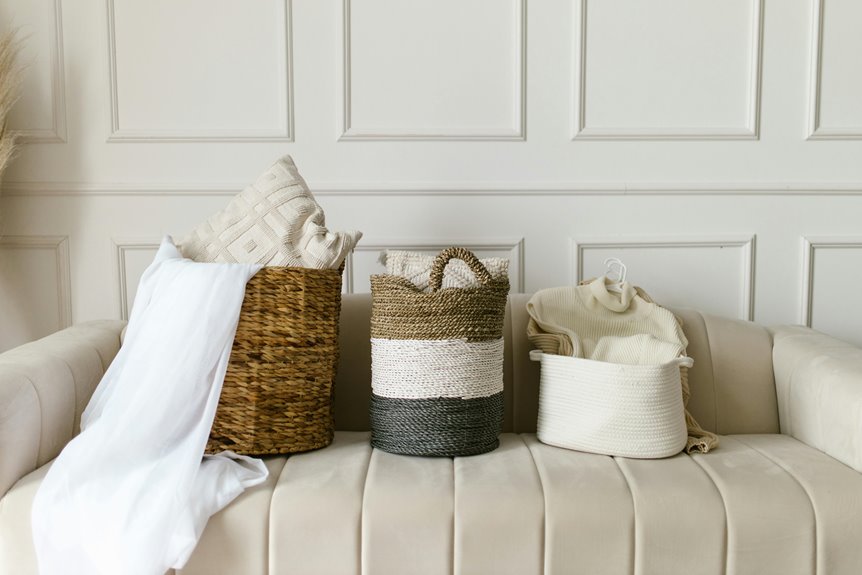
You’ll want gauze that’s soft, breathable, and gentle on your baby’s skin—look for natural fibers like cotton or bamboo, with a moderate thread count (150-200) for comfort and airflow. Bamboo feels silkier and manages moisture better, while cotton is durable and softens with washes. Choose lightweight, single- or double-ply gauze based on desired thickness. Opt for calm, neutral colors and easy-care washing instructions to keep your baby cozy and safe. Discover how each factor shapes the perfect baby blanket or swaddle.
Key Takeaways
- Choose lightweight, breathable gauze fabric prioritizing softness and comfort to protect delicate baby skin and reduce overheating risks.
- Opt for natural fibers like cotton for softness or bamboo for silkier texture and better moisture-wicking properties.
- Select gauze with a moderate thread count (150-200) and single or double-ply balance for durability without sacrificing breathability.
- Favor soft pastel or neutral colors with subtle patterns that complement nursery décor and maintain a calming aesthetic.
- Follow gentle washing instructions with baby-safe detergents, avoid bleach, and regularly inspect blankets for safety and durability.
Understanding Gauze Fabric: What Makes It Ideal for Babies
Gauze fabric stands out for baby blankets because it’s lightweight, breathable, and soft against delicate skin. When you choose gauze, you’re picking a material that allows air to circulate freely, reducing the risk of overheating.
Gauze is the perfect baby blanket fabric—light, breathable, and gentle on sensitive skin.
You’ll notice its loose weave gives it a gentle texture, perfect for wrapping your baby without causing irritation. Gauze is also naturally absorbent, so it handles moisture well, keeping your little one comfortable.
Because it’s thin yet durable, you can easily layer it or use it alone, both of which work well in different weather conditions. You’ll find that gauze softens further with each wash, making it even more soothing.
These qualities make gauze an excellent choice for baby blankets and swaddles.
Key Characteristics to Look for in Baby Gauze
When choosing gauze for your baby blanket, you’ll want to focus on softness and comfort to keep your little one cozy.
Breathability is key to guarantee proper airflow and prevent overheating.
Plus, durability and washability matter since baby blankets need frequent cleaning without losing quality.
Softness and Comfort
Although you might prioritize durability or design, softness and comfort should always come first when choosing gauze for baby blankets. Your baby’s delicate skin needs gentle fabric that won’t cause irritation or discomfort.
Look for gauze made from high-quality, natural fibers like cotton, which feel smooth and tender against the skin. You’ll want a texture that’s plush yet lightweight, so the blanket feels cozy without being heavy.
Avoid stiff or rough materials, as they can rub and irritate sensitive skin. Also, consider how the gauze softens after washing—some fabrics become even gentler over time, enhancing comfort.
Breathability and Airflow
How does airflow impact your baby’s comfort? Proper breathability in gauze keeps your little one cool and prevents overheating, which is essential for safe sleep and overall well-being.
When choosing gauze, focus on materials that allow air to circulate freely.
Here are three key reasons breathability matters:
- Temperature regulation – Breathable gauze helps maintain a comfortable body temperature, reducing fussiness caused by overheating.
- Moisture control – Good airflow wicks away sweat and moisture, keeping your baby dry and cozy.
- Skin health – Proper ventilation minimizes the risk of irritation or rashes from trapped heat and moisture.
Selecting gauze with excellent breathability guarantees your baby stays comfortable and safe during naps and nighttime sleep.
Durability and Washability
Breathable gauze keeps your baby comfortable, but it also needs to hold up through frequent use and washing. When choosing gauze, look for fabrics made from high-quality cotton or cotton blends known for their strength.
Double or triple-layered gauze offers added durability without sacrificing softness. You’ll want gauze that maintains its texture and shape after multiple washes, so check for pre-shrunk or pre-washed options to avoid surprises later.
Avoid gauze that easily frays or loses its softness quickly, as baby blankets and swaddles undergo constant laundering. Opt for materials that tolerate machine washing on gentle cycles and air drying, ensuring they stay safe and comfy for your little one over time.
Durable, washable gauze saves you time and keeps your baby cozy.
Comparing Cotton Gauze vs. Bamboo Gauze for Baby Blankets
When choosing gauze for baby blankets, you might wonder which fabric suits your little one best: cotton or bamboo? Both have unique benefits, so consider these points:
1. Softness: Bamboo gauze often feels silkier and smoother, making it ideal for sensitive baby skin.
Cotton gauze is soft too, but slightly coarser.
2. Breathability: Both fabrics allow good airflow, but bamboo naturally wicks moisture better, helping keep your baby dry and comfortable.
3. Eco-friendliness: Bamboo grows rapidly with less water and pesticides, making it a more sustainable choice compared to conventional cotton.
How Thread Count and Weave Affect Softness and Breathability
You’ll want to understand how thread count influences the softness of gauze, as higher counts usually mean a smoother feel.
Different weave types also play a big role in how breathable and cozy the fabric feels against your baby’s skin.
Knowing these details helps you pick a blanket that keeps your little one comfortable and snug.
Thread Count Basics
Understanding thread count is key to choosing the right gauze for your baby blanket. Thread count measures how many threads are woven into one square inch of fabric, directly impacting softness and breathability. Here’s what you need to know:
- Lower Thread Count (around 100-150): Offers excellent breathability, making it ideal for warmer climates and preventing overheating.
- Moderate Thread Count (150-200): Balances softness and airflow, perfect for everyday use with gentle durability.
- Higher Thread Count (200+): Feels denser and softer but may reduce breathability, which could cause discomfort in hot weather.
Keep in mind, while a higher thread count feels plush, gauze’s loosely woven structure means even lower counts can be soft and breathable—perfect for your baby’s sensitive skin.
Weave Types Explained
Thread count plays a big role in your baby blanket’s comfort, but the weave type also shapes how soft and breathable the fabric feels. Different weaves create distinct textures and airflow.
For instance, a plain weave, with its simple over-under pattern, offers durability and breathability, making it great for lightweight swaddles. A gauze weave, often loose and airy, enhances breathability further, helping regulate your baby’s temperature.
On the other hand, tighter weaves like twill or satin trap more air, reducing breathability but adding a silky texture.
When choosing gauze for baby blankets, consider how the weave complements the thread count to balance softness and airflow, ensuring your little one stays comfy and cozy without overheating.
Impact on Softness
Although the weave type sets the foundation for your baby blanket’s feel, the thread count greatly influences its softness and breathability.
When choosing gauze, you want a balance that guarantees the fabric is gentle on your baby’s skin and allows air to circulate.
Here’s what to keep in mind:
- Higher Thread Count: Means tighter fabric, which can feel softer but may reduce breathability.
- Lower Thread Count: Creates a looser weave, enhancing airflow but potentially sacrificing some softness.
- Weave Interaction: Double gauze, with two layers, offers both softness and breathability, making it ideal for blankets and swaddles.
Choosing the Right Weight and Ply for Swaddles
When choosing gauze for swaddles, you’ll want to evaluate both weight and ply carefully to guarantee comfort and breathability.
Lightweight gauze works best because it’s soft and airy, preventing your baby from overheating. Look for fabrics between 40 to 60 grams per square meter; this range balances warmth without bulk.
Choose lightweight gauze (40-60 gsm) for soft, airy swaddles that prevent overheating and provide balanced warmth.
Ply refers to the number of yarn layers twisted together. Single-ply gauze feels lighter and more breathable, while double-ply offers added durability and a slightly thicker texture.
For swaddling, a double-ply with a lightweight weight often provides the perfect mix of softness and strength, ensuring your blanket holds up through washes but remains gentle on delicate skin.
Always prioritize breathable, lightweight options to keep your baby cozy yet comfortable.
Color and Pattern Considerations for Baby Items
Beyond choosing the right weight and ply for your baby’s blanket, you’ll want to think about color and pattern as well. These choices impact not only aesthetics but also how well the blanket fits your nursery’s vibe and your baby’s comfort.
- Soothing Colors: Opt for soft pastels or neutral tones that promote calmness and suit any décor.
- Gender-Neutral Options: Choose colors like yellow, green, or gray to keep things flexible and timeless.
- Pattern Size: Smaller, subtle patterns usually work better on gauze blankets, avoiding overwhelming the delicate fabric.
Care and Maintenance Tips to Keep Gauze Soft and Safe
Three simple care steps can keep your gauze baby blanket soft, safe, and cozy for your little one.
First, always wash the blanket in cold water using a gentle, baby-safe detergent to prevent fabric damage and irritation. Avoid bleach and fabric softeners, as they can degrade gauze fibers and reduce absorbency.
Second, air dry your gauze blanket or tumble dry on low heat to maintain its softness and prevent shrinking. High heat can weaken the fabric over time.
Finally, avoid ironing gauze fabric; if necessary, use a low setting with a cloth barrier to protect the fibers.
Frequently Asked Questions
Can Gauze Fabric Be Used for Baby Clothing Besides Blankets?
Imagine a gentle breeze wrapping your little one in softness. You can definitely use gauze fabric for baby clothing—it’s breathable, lightweight, and cozy, perfect for keeping your baby comfortable and snug all day long.
Is Organic Gauze Fabric Significantly Better for Babies?
You’ll find organic gauze fabric gentler on your baby’s sensitive skin since it’s free from harmful chemicals. It’s also more breathable and eco-friendly, making it a better choice for comfort and safety.
How Does Gauze Compare to Muslin for Baby Swaddles?
You’ll find gauze lighter and more breathable, perfect for warmer climates, while muslin’s denser weave offers durability and softness. Both are gentle, but gauze feels airier, and muslin provides a cozy, snug swaddle experience.
Are There Hypoallergenic Dyes Used in Colored Gauze?
Yes, you’ll find hypoallergenic dyes used in colored gauze, especially for baby products. These dyes minimize irritation risks, making the fabric safer for sensitive skin. Always check labels to confirm the dyes meet safety standards.
Can Gauze Blankets Be Safely Used in Cribs?
You shouldn’t use gauze blankets loose in cribs because they pose a suffocation risk. Instead, opt for properly fitted swaddles or sleep sacks designed to keep babies safe while providing comfort and breathability.