
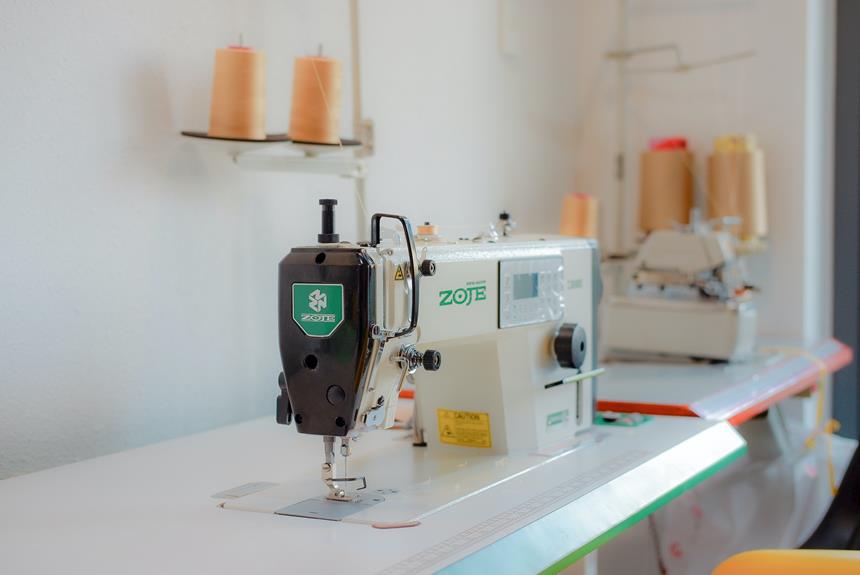
Do you know that over 25 million sewing machines are sold worldwide every year?
Understanding how a sewing machine works is essential for mastering the art of sewing. By following five essential steps, you can gain a deeper understanding of the inner workings of a sewing machine and improve your sewing skills.
Threading the machine, adjusting the thread tension, positioning the fabric, activating the stitching mechanism, and finishing the stitch are all crucial elements in the sewing process.
In this guide, we will explore each step in detail, giving you the knowledge and confidence to operate a sewing machine with ease and precision.
Key Takeaways
- Threading and tensioning the sewing machine is crucial for proper stitching and to avoid breakage.
- Fabric positioning is important for accurate and precise stitches.
- Activating the stitching mechanism involves gently pressing the foot pedal and guiding the fabric under the presser foot.
- Paying attention to the final stitches and inspecting the stitch for consistent tension and no loose threads ensures a professional finish.
Threading the Sewing Machine
To thread a sewing machine, you'll need to follow the specific instructions provided in the machine's manual. The threading process is crucial for the machine to function effectively.
Begin by raising the presser foot and ensuring that the needle is in its highest position. This will make it easier to thread the machine.
Next, follow the numbered guides in the manual to correctly guide the thread through the machine's various components, such as the tension discs, take-up lever, and needle. Proper needle insertion is essential. Ensure that the needle is inserted with the flat side facing the back of the machine and that it's of the correct size and type for the fabric being used.
Once the threading process is completed, pull the thread towards the back of the machine, leaving a tail of about 6 inches. By following these precise steps, you can efficiently prepare the sewing machine for use, ensuring smooth and accurate stitching.
Remember to refer to the manual for specific details on your machine's threading process.
Tensioning the Thread
You should adjust the thread tension to ensure even stitching and avoid thread breakage while sewing. Proper tension is crucial for achieving high-quality stitches. When the tension is too loose, you may experience loose, loopy stitches on the top side of the fabric, while overly tight tension can cause the thread to break frequently.
To adjust the tension, start by setting the tension dial to the midpoint. Then, test sew a sample on the same fabric you'll be using for your project. Examine the stitches and make adjustments as needed.
If the stitches on the top side of the fabric are too loose, tighten the tension slightly. Conversely, if the stitches on the bottom side of the fabric are loose, loosen the tension. Keep testing and adjusting until the stitches appear even on both sides of the fabric.
Troubleshooting tension issues can be challenging, but with patience and practice, you'll become adept at recognizing and resolving tension-related problems, ensuring that your sewing projects turn out beautifully.
Positioning the Fabric
Position your fabric under the presser foot, ensuring it's aligned straight with the edge of the foot for accurate sewing. Proper fabric placement is crucial for achieving neat and precise stitches.
Here are essential steps for positioning the fabric:
- Smooth the fabric: Before placing it under the presser foot, ensure the fabric is smooth and free of wrinkles. Smooth fabric prevents irregular stitching and ensures a professional finish.
- Align the fabric edges: Proper alignment of the fabric edges with the presser foot helps in maintaining straight and even stitches. Misaligned fabric can result in skewed or crooked seams.
- Use the seam guide: Many sewing machines have a built-in seam guide. Utilize this feature to maintain consistent seam allowances and achieve professional-looking results.
Understanding fabric placement and mastering stitching techniques are fundamental to the sewing process. By following these steps, you can ensure that your fabric is correctly positioned for precise and beautiful stitches.
Keep practicing to perfect your fabric positioning skills and elevate the quality of your sewing projects.
Activating the Stitching Mechanism
Once the fabric is positioned correctly, activate the stitching mechanism by gently pressing down on the foot pedal while guiding the fabric under the presser foot. As you press the foot pedal, the needle will start moving up and down in a rapid and precise motion, creating the stitches on the fabric. This is the pivotal moment where the combination of the bobbin placement and needle positioning comes into play, allowing the sewing machine to work its magic.
| Bobbin Placement | Needle Positioning | Stitching Mechanism |
|---|---|---|
| Ensures smooth and even thread tension | Determines the stitch type and length | Activated by pressing the foot pedal |
| Located in the bobbin case beneath the needle plate | Adjusted using the handwheel or electronic controls | Drives the needle up and down to form stitches |
| Must be correctly loaded for seamless stitching | Needs to be aligned properly for accurate stitching | Utilizes the bobbin thread and upper thread to create stitches |
Understanding the interaction between the bobbin placement and needle positioning is crucial for mastering the stitching mechanism of a sewing machine. With these elements in harmony, you can create flawless stitches with ease.
Finishing the Stitch
To finish the stitch, guide the fabric carefully as you gradually release pressure from the foot pedal. As the sewing machine slows down, it's important to pay attention to a few key steps to ensure a perfect finish.
- Checking bobbin: Before completing the stitch, take a moment to check the bobbin. Ensure that there's enough thread left to finish the stitch without running out halfway through. This simple check can save you the frustration of an incomplete stitch.
- Adjusting speed: As you approach the end of the seam, it's crucial to adjust the speed of the sewing machine. Gradually reduce the pressure on the foot pedal to slow down the machine, allowing for a precise and neat final few stitches. This control over speed will help you achieve a professional-looking finish.
- Inspecting the stitch: Once the final stitches are in place, take a moment to inspect the stitch. Ensure that the tension is consistent, and there are no loose threads or irregularities. This attention to detail will result in a polished and well-executed stitch.
Frequently Asked Questions
What Are the Different Types of Sewing Machine Needles and When Should They Be Used?
When using a sewing machine, you should choose needle sizes based on the fabric weight, and needle materials based on the type of fabric. For example, use a smaller needle size for lightweight fabrics and a larger needle size for heavier fabrics.
How Do I Troubleshoot Common Sewing Machine Issues Like Skipped Stitches or Thread Jams?
To troubleshoot common sewing machine issues like skipped stitches or thread jams, start by cleaning and oiling your machine regularly. Check needle and thread quality, and ensure proper tension settings. These maintenance and troubleshooting techniques can help resolve common sewing machine problems.
Can a Sewing Machine Be Used for Embroidery or Quilting, and if So, What Additional Accessories Are Needed?
Yes, a sewing machine can be used for embroidery or quilting. To do embroidery, you'll need embroidery accessories compatible with your machine. For quilting, additional attachments help create decorative stitching options and fabric manipulation techniques.
How Do I Maintain and Clean My Sewing Machine to Ensure Its Longevity and Optimal Performance?
To ensure your sewing machine's longevity and optimal performance, it's essential to prioritize cleaning and maintenance. Regularly oiling the machine and cleaning out lint and debris from the bobbin area will help keep it running smoothly.
Are There Any Safety Precautions or Best Practices to Keep in Mind While Using a Sewing Machine?
When using a sewing machine, remember to follow safe practices and prioritize machine maintenance. Always keep your fingers away from the needle, unplug the machine when not in use, and regularly clean and oil it for optimal performance.